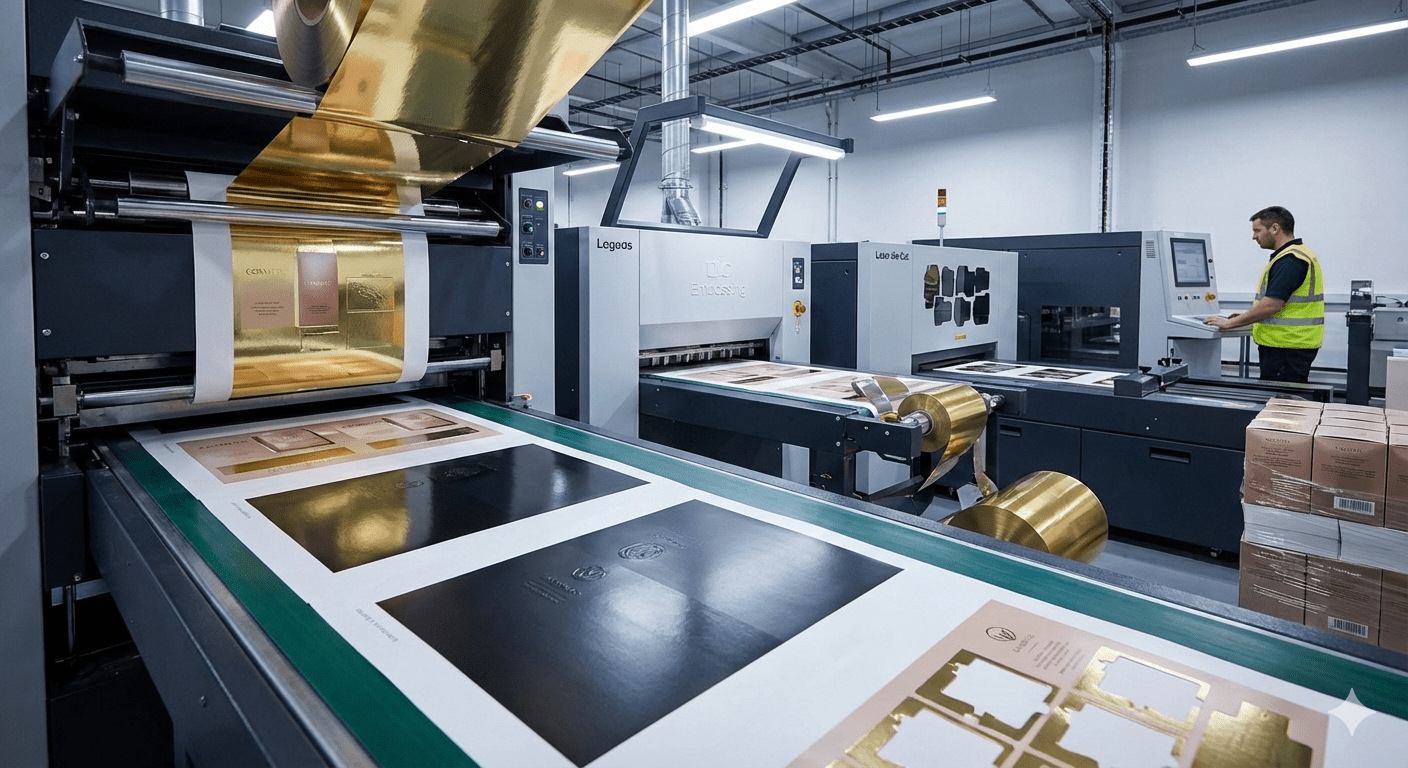
Postpress—also known as print finishing—includes all production steps that happen after the printed sheet comes off the press.
These processes transform printed sheets into final products with durability, precision, and visual impact.
Whether we are producing premium packaging, commercial print, books, labels, or marketing materials, postpress defines the final quality our clients see and feel.
What Is Postpress?
Postpress is the stage where printed sheets are cut, folded, bound, laminated, coated, glued, die-cut, or otherwise finished to meet final product specifications.
We can say that it represent the bridge between printing and the final consumer-ready product.
Today’s postpress operations combine:
- Precision engineering
- Automation
- Digital quality control
- Specialized materials and coatings
This makes them one of the most important value-adding parts of the printing workflow.
Coating as a Value-Adding Postpress Step in Offset Printing
Coating is one of the most important value-adding postpress processes in offset printing.
Beyond basic protection, coatings improve visual appeal of the product, tactile experience, durability, and perceived product quality—often determining whether a printed piece feels standard or premium.
In today’s modern offset printing production, most printed sheets already leave the offset press coated with an aqueous (AQ) varnish via an inline coating unit.
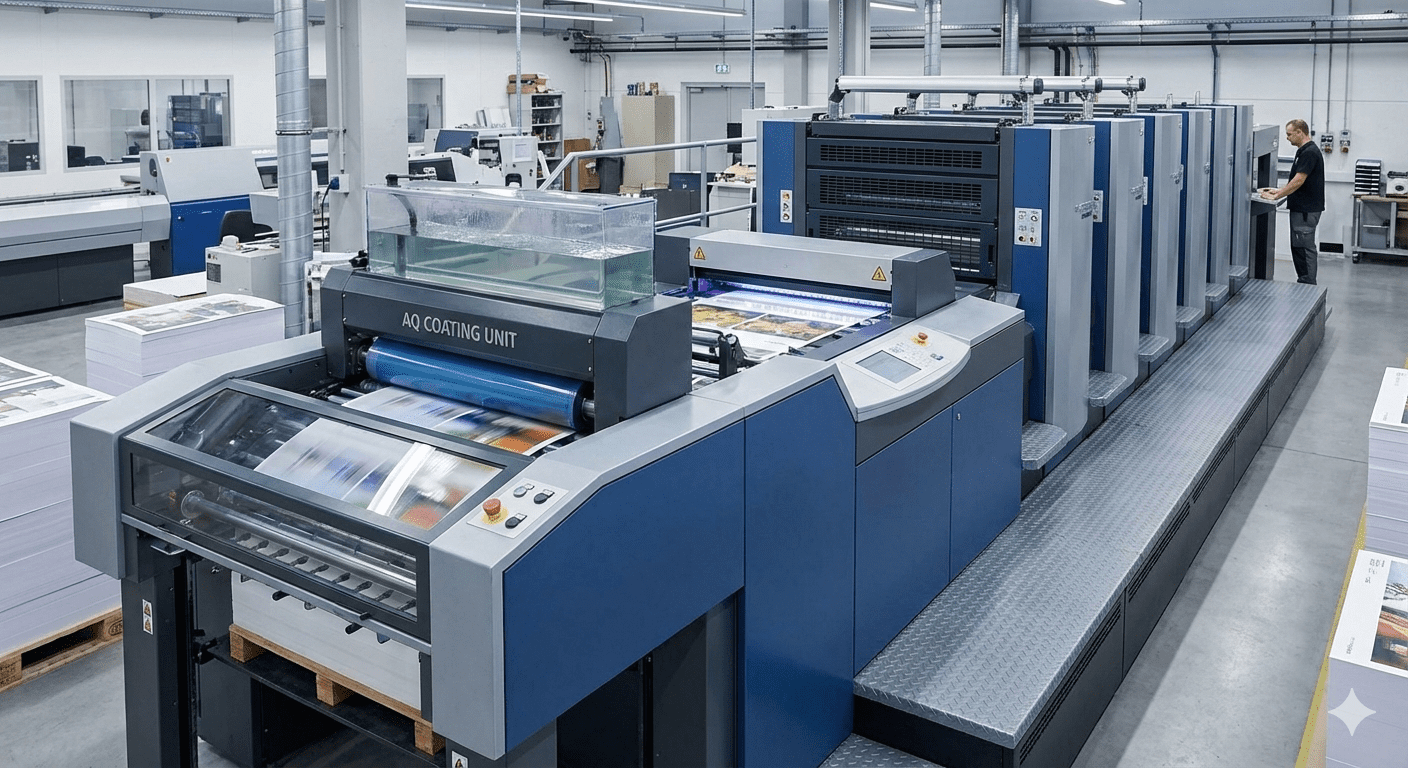
This baseline coating protects the ink and stabilizes sheets for further postpress operations.
From this standard starting point, printers apply additional or specialized coatings as postpress steps when greater visual impact, durability, or uniqueness are required.
Why Coating Is Applied After Offset Printing
Coatings that can be applied inline or offline are served for multiple purposes:
- Protection against rubbing, scratching, moisture, and fingerprints
- Faster handling and reduced set-off
- Improved color depth and contrast of printed design
- Added tactile and visual differentiation
- Higher perceived product value
- Better performance in folding, die cutting, and binding
In commercial and packaging printing, coatings are no longer optional choice — they represent a strategic finishing choice.
Aqueous Coating (AQ Varnish)
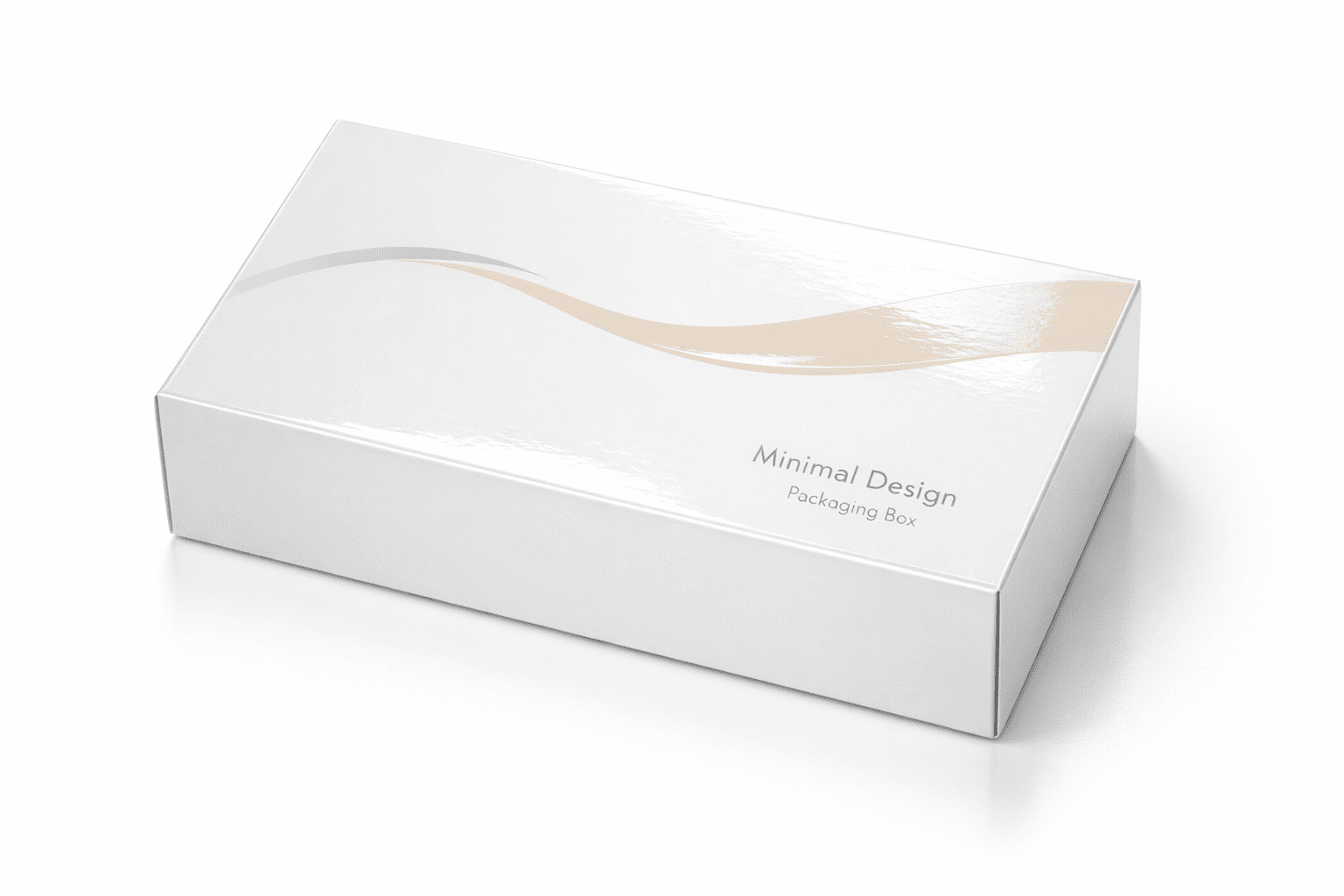
Aqueous coating is a water-based varnish usually applied inline on offset presses through a coating unit.
It is the most widely used coating in offset printing.
It can be also applied offline on a separate coater when heavier coverage or special effects are required.
Key characteristics of AQ Varnishes are that they have fast drying, low VOC emission, they are odourless, recyclable and cost effective.
AQ coating is often the base protective layer that allows:
• Clean folding
• Reliable die cutting
• Reduced marking during stacking and transport
In practice, many printers consider AQ coating a standard output condition of offset printing rather than a premium finish.
UV Coating
UV coating is a high-performance liquid coating that is cured instantly using ultraviolet lamps (traditional UV or LED-UV).
It can be applied inline directly on UV-capable offset presses, or offline as a dedicated postpress step, often for spot UV effects.
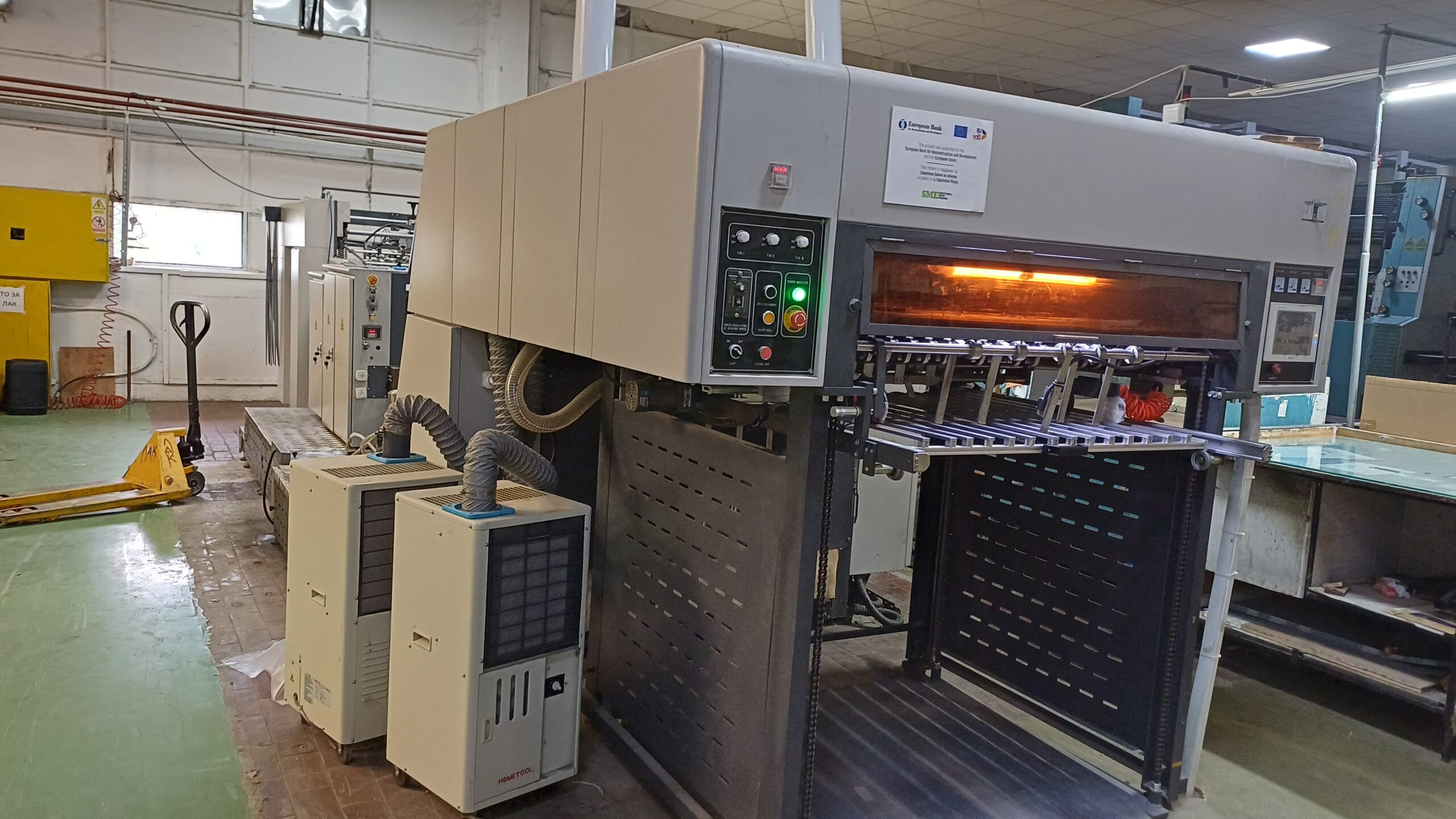
The key advantages of UV coating are:
- Extremely high gloss
- Superior abrasion resistance
- Instant curing (no drying time)
- Strong visual cont
UV Coating can be:
- Full-flood UV
- Spot UV
- Raised (3D) UV
- Textured UV effects
When coating with UV Varnish, you need to know that this procedure requires precise registration (especially for spot UV).
Also it is not always ideal for folding or gluing without pre-planning activities.
It can be combined with matte lamination for contrast and luxurious look.
UV coating is chosen when visual impact is a priority over recyclability or flexibility.
Spot UV & Raised UV
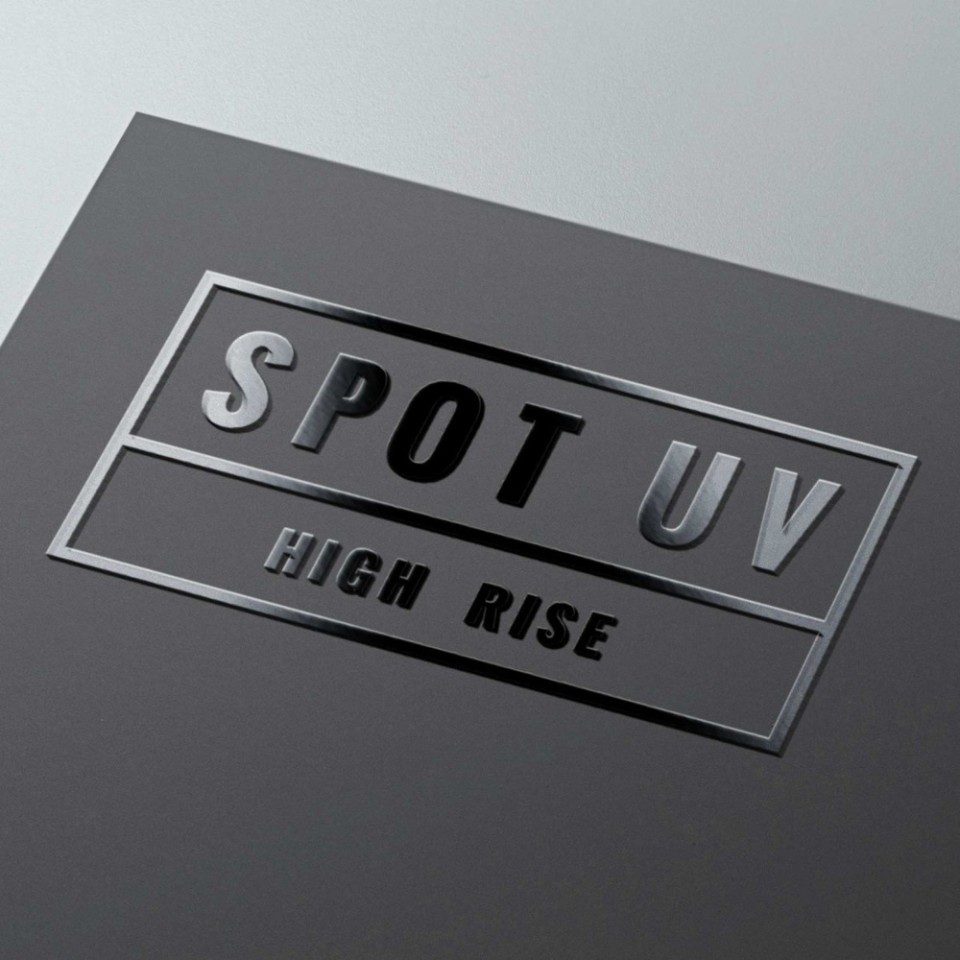
It is used primarily for premium marketing materials and packaging on which we want to achieve high gloss contrast or 3D tactile raised UV.
Also we can do selective highlight on logos, images, or other areas of interest.
Textured & Special-Effect Coatings
Textured coatings are designed to create visible and tactile surface effects that goes beyond smooth gloss or matte finishes.
Popular textured coatings
- Sand / grit texture
- Linen texture
- Leather-like texture
- Pearl and metallic coatings
- Raised tactile varnishes
Application methods can be with inline coating units but with limited effects,or with offline UV coaters.
For heavy builds screen coating units are used.
They find purposes inluxury packaging, premium promotional prints, beverage and cosmetics, speciality publishing…
Soft-Touch Coating
Soft-touch coating is a specialty coating designed to create a velvet-like, rubberized surface that feels smooth and luxurious.
It can be applied as:
- Soft-touch aqueous coating
- Soft-touch UV coating
- Soft-touch lamination (film)
Key characteristics of this type of coating is matte appearance and warm tactile feel.
With this type of coating buyer of printed product receives premium perception.
It also represents excellent base for spot UV or foil stamping.
There are 3 common combinations with which we can achieve unusual, luxurious look of the final product.
- Soft-touch coating + spot UV
- Soft-touch lamination + hot foil
- Soft-touch coating + embossing
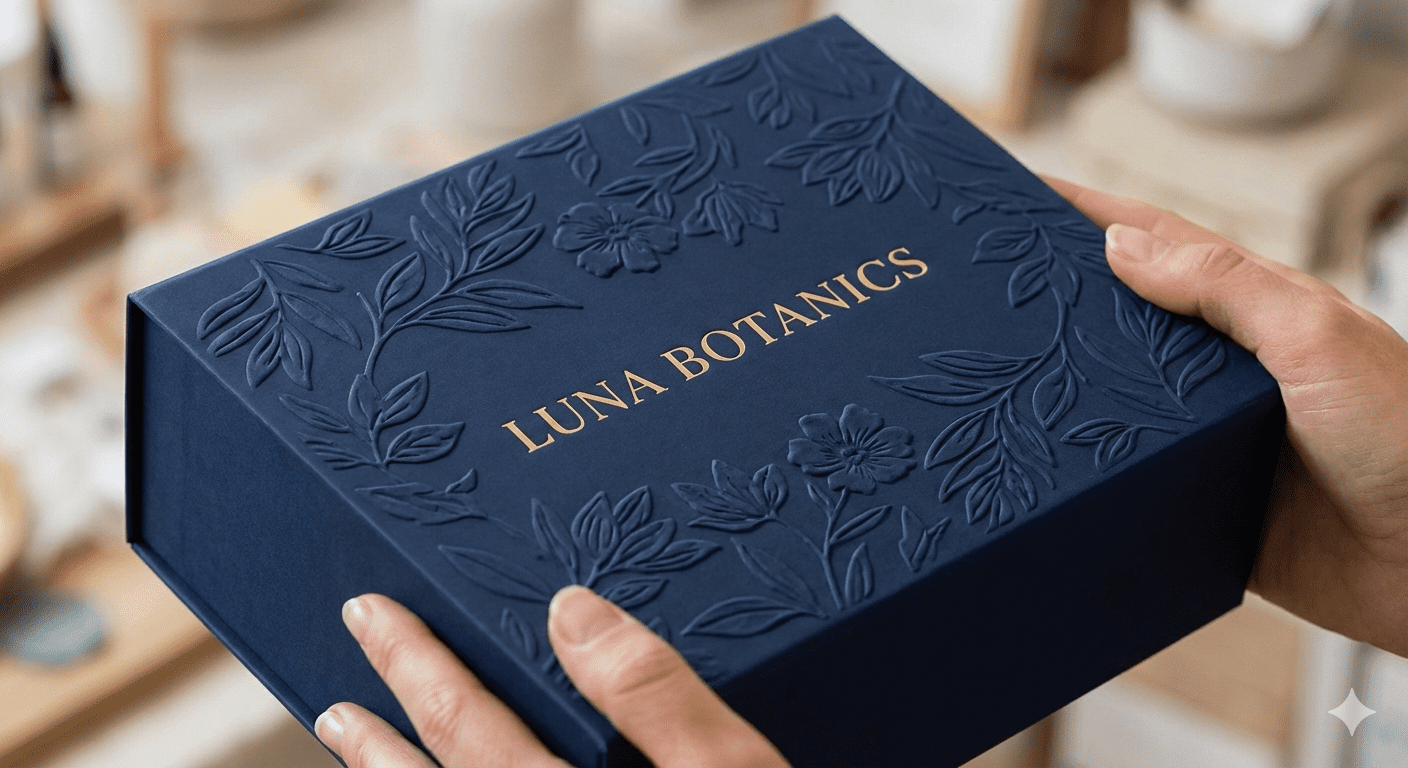
There are some postpress challenges that we have to take in consideration when using this type of coating like:
- Sensitive to scratches if not formulated properly
- Requires careful handling during stacking
- Often paired with protective top layers
Soft-touch coating is chosen not for durability alone, but for emotional and sensory impact.
Choosing the right coating strategy depends on many factors like:
- End-use of the product
- Budget
- Required durability
- Desired visual impact
- Sustainability goals
- Compatibility with folding, gluing, and binding
| Goal | Recommended Coating |
| Basic protection | Inline AQ coating |
| High gloss impact | UV coating |
| Luxury feel | Soft-touch coating |
| Shelf differentiation | Textured or raised coatings |
| Eco-focused jobs | AQ coating |
Hot Foil Stamping as a High-Value Postpress Process
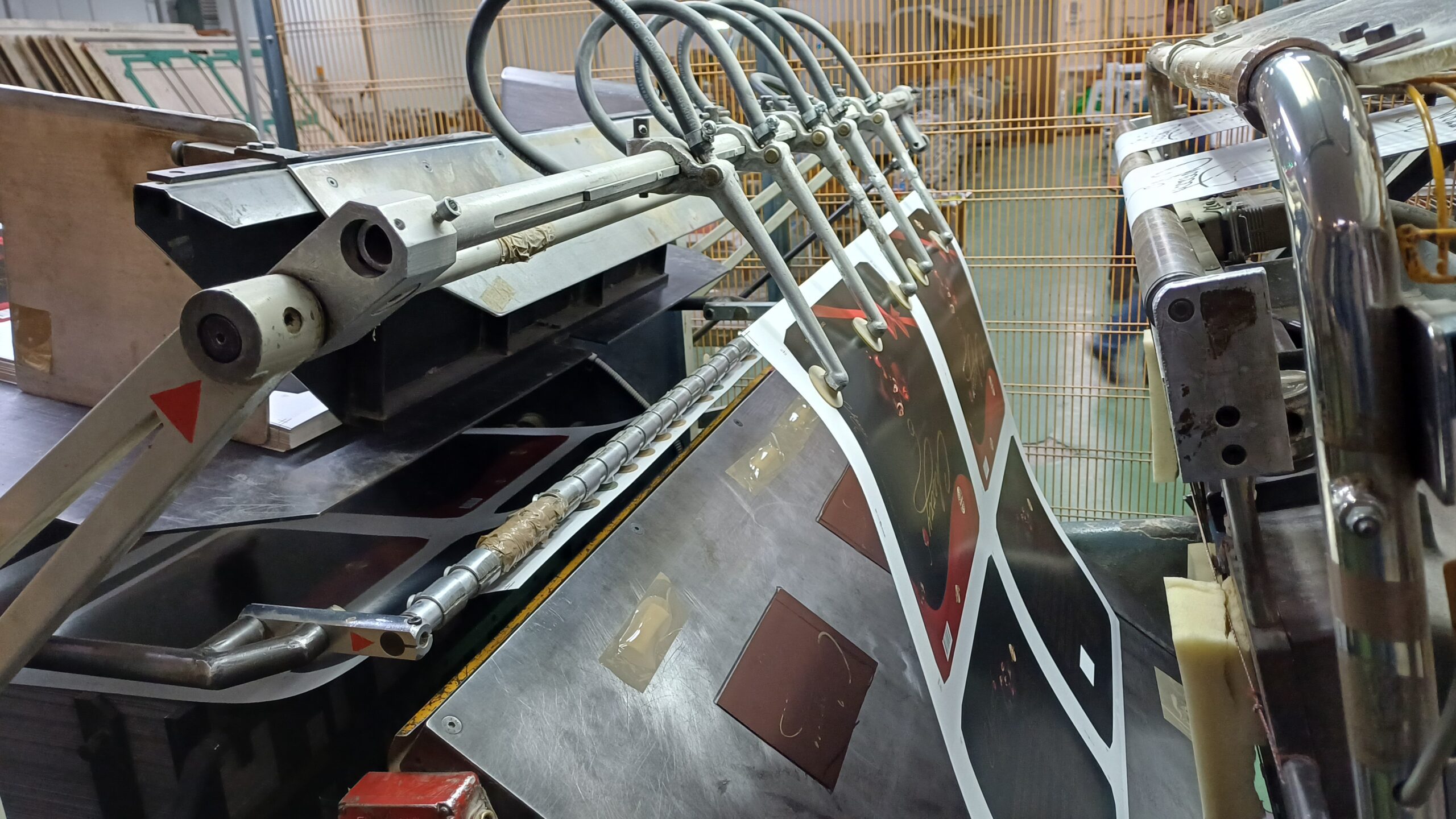
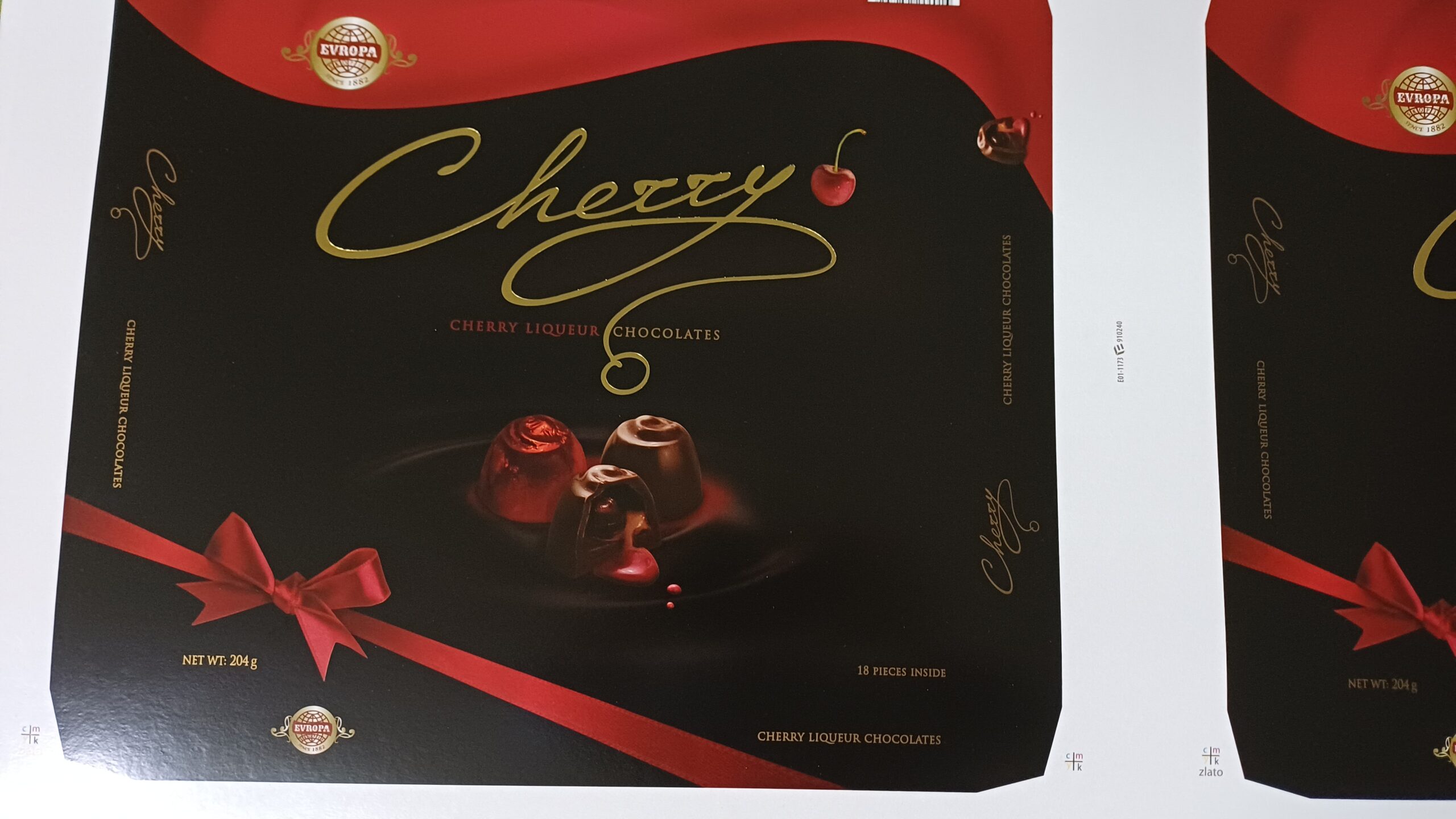
Hot foil stamping is one of the most recognizable premium finishing techniques in offset printing.
It uses heat, pressure, and metallic or pigmented foils to transfer a thin foil layer onto printed sheets, creating reflective, luxurious visual effects that cannot be replicated by ink alone.
Unlike coatings, hot foil stamping is always a postpress process, performed after printing and typically after an initial protective coating (most commonly AQ varnish).
The process involves:
- A heated metal die (usually magnesium, brass, or copper)
- A foil roll (metallic, pigment, holographic, or matte)
- Pressure that transfers foil from the carrier film onto the substrate
The foil bonds only where the die makes contact, resulting in precise, ink-free metallic coverage.
Why Hot Foil Stamping Adds Value
Hot foil stamping delivers benefits that offset printing alone cannot achieve:
- True metallic reflectivity (not simulated)
- High contrast against matte or soft-touch surfaces
- Strong shelf impact
- Long-lasting finish resistant to fading
- Instant perception of quality and luxury
For many brands, foil stamping is a design decision as much as a production one.
Foils used in Postpress can be Metallic foils (Gold, Silver, Bronze…), Pigment foils (White, Black, Matte or some Brand Specific Color) or Special foils (Holographic, Pearl, Transparent…).
Each foil type interacts differently with paper, cardboard, coatings, and textures, requiring careful selection during job planning.
While some high-end presses allow inline foiling, in practice most foil stamping is done offline on dedicated foil stamping machines.
This allows higher pressure, better control, and complex effects.
Typical Applications
- Luxury packaging
- Cosmetic and perfume boxes
- Wine & spirits labels
- Certificates and diplomas
- Book covers
- Premium business cards
Hot foil stamping is rarely used for functional reasons—it is chosen for brand positioning and emotional impact.
Design & Production Considerations
- Avoid very fine lines on uncoated stocks
- Ensure sufficient spacing around foiled elements
- Plan die costs into pricing
- Test adhesion on coated or laminated surfaces
- Consider embossing of foil areas for added depth
Hot foil stamping transforms printed material into a luxury product.
When used strategically—often on top of AQ-coated offset sheets—it delivers unmatched visual impact and elevates brand perception far beyond standard print finishes.
Embossing & Debossing in Postpress
Embossing and debossing are mechanical finishing processes that alter the surface of printed sheets by creating raised (embossed) or recessed (debossed) areas.
Unlike coatings or foils, these techniques rely on physical deformation of the substrate.
They are always performed as postpress processes after offset printing.
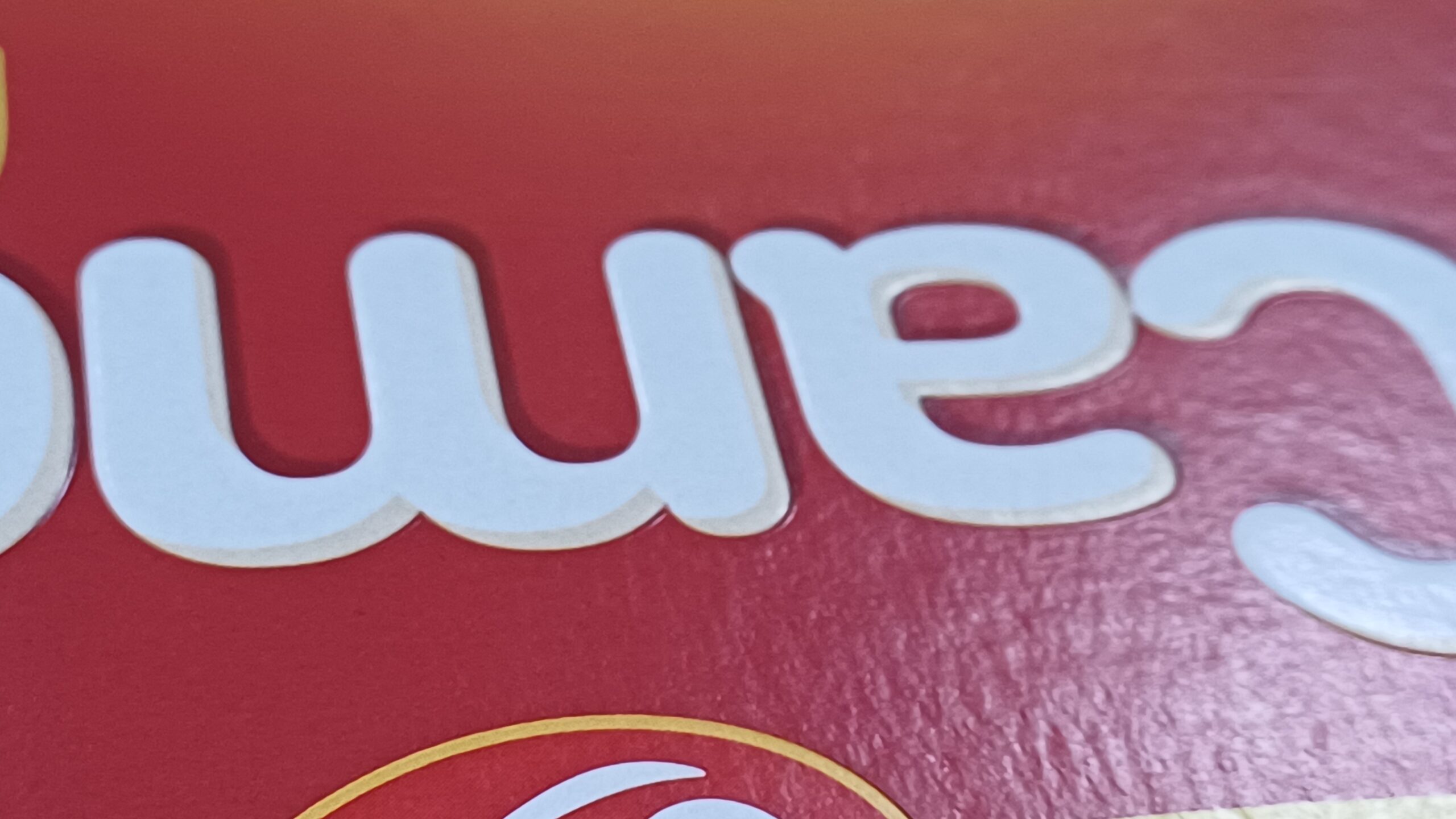
How Embossing & Debossing Work
The process uses:
- A male die (raised)
- A female counter-die (recessed)
- Pressure to reshape the paper fibers
No ink, foil, or coating is required—though these techniques are often combined with both.
Types of Embossing & Debossing
Blind Embossing
- No ink or foil
- Pure texture and shadow
- Subtle, elegant effect
Foil Embossing
- Combines embossing with hot foil stamping
- High-impact, luxury finish
Multi-Level Embossing
- Multiple depths in one design
- Sculpted, dimensional look
Registered Embossing
- Aligns perfectly with printed graphics
Embossing and debossing introduce tactile engagement, which enhances user interaction, differentiates premium products, and increases memorability.
In many cases, customers remember how a product feels more than how it looks.
Planning the correct sequence is critical:
Print → AQ coat → Foil (optional) → Emboss/Deboss
It is used in Luxury packaging, Brand logos, Certificates, Book covers…
Design & Production Guidelines
- Avoid overly small text
- Allow adequate spacing
- Match emboss depth to paper thickness
- Test dies before full production
- Account for die cost and setup time
Embossing and debossing are not decorative extras—they are strategic finishing tools that add dimension, tactility, and emotional value to the final product.
When applied to AQ-coated offset prints and combined with foil or soft-touch finishes, they create some of the most powerful premium print effects available.
Die Cutting as a Structural Postpress Process in Offset Printing
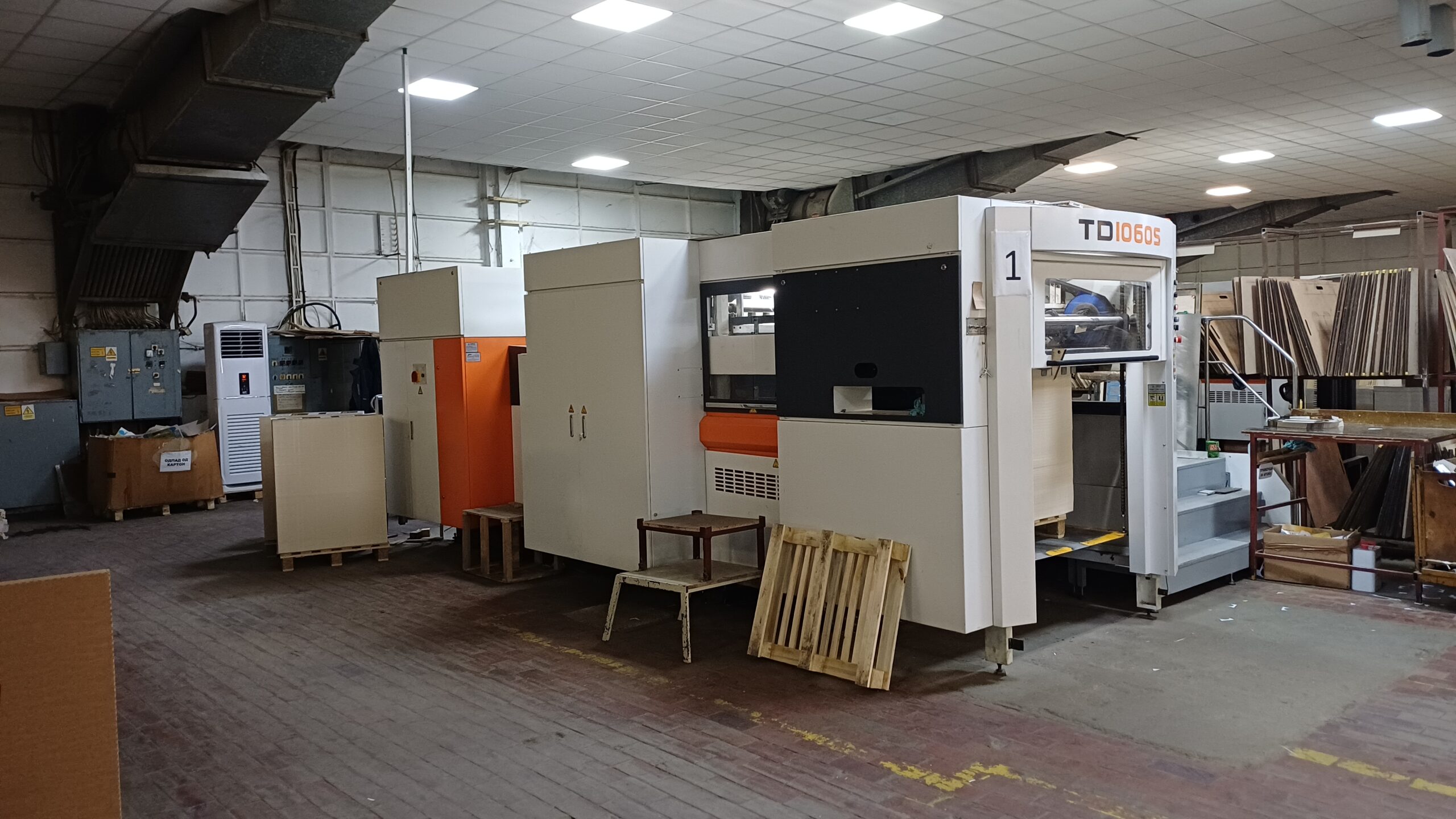
Die cutting is a precision finishing process that transforms flat printed sheets into functional, three-dimensional products.
It enables complex shapes, folds, windows, perforations, and creases that cannot be achieved with straight cutting alone.
In offset printing workflows, die cutting is always performed as a postpress operation, after printing and typically after an inline aqueous (AQ) coating has been applied.
Die cutting uses a custom-made steel rule die mounted on a flat or rotary base.
Under pressure, the die cuts, creases, scores, or perforates the printed sheet according to the product’s structural design.
A single die can perform multiple actions in one pass:
- Cutting
- Creasing
- Perforating
- Embossing (light)
- Waste stripping
Why Die Cutting Adds Value
Die cutting is not only about shape—it defines function, usability, and shelf impact.
Key value contributions:
- Creation of complex packaging structures
- Accurate folding behavior
- Consistent product dimensions
- Premium feel through clean edges and creases
- Efficient mass production of shaped products
Without precise die cutting, even the best-printed packaging will fail during assembly or use.
Die cutting is especially critical in packaging, where structural integrity and ease of assembly are essential.
Types of Die Cutting Used in Postpress
Flatbed Die Cutting – It is the most common die cutting method for offset-printed sheets.
Main Characteristics:
- Sheet-by-sheet operation
- Extremely high accuracy
- Ideal for short to long runs
- Supports complex designs
Used for:
- Folding cartons
- Luxury packaging
- Multi-crease designs
Rotary Die Cutting – Primarily is used for:
- Labels
- Flexible packaging
- Very high-volume runs
Main Characteristics:
- Continuous operation
- High speed
- Lower setup flexibility
- Best for repeat jobs
Rotary Die Cutting can be paired with UV or flexo printing, but can also follow offset printing in hybrid workflows.
Digital & Laser Die Cutting – It is used mainly for:
- Prototypes
- Short runs
- Variable designs
Advantages:
- No physical die required
- Fast design changes
- Ideal for sampling
Limitations:
- Slower for long runs
- Higher cost per unit
- Limited material thickness
Die Cutting & Creasing – What Do We Have To Know
Creasing is as important as cutting.
Why creasing matters
- Prevents cracking on coated papers
- Ensures clean folds
- Improves box assembly
- Maintains structural strength of the box
Stripping & Blanking
Modern die cutters often include:
- Stripping units – remove waste automatically
- Blanking units – separate finished shapes into stacks
Benefits:
- Faster downstream processing
- Reduced manual labor
- Higher consistency
- Cleaner final products
Folding & Gluing of Cardboard in Postpress
Gluing and folding of cardboard is a post-press stage in which cut boxes are transformed into functional packaging structures.
This process gives printed cartons their final form, strength and usability, ensuring they perform correctly during filling, transport, and end-use.
This process takes places on folder-gluer machines.
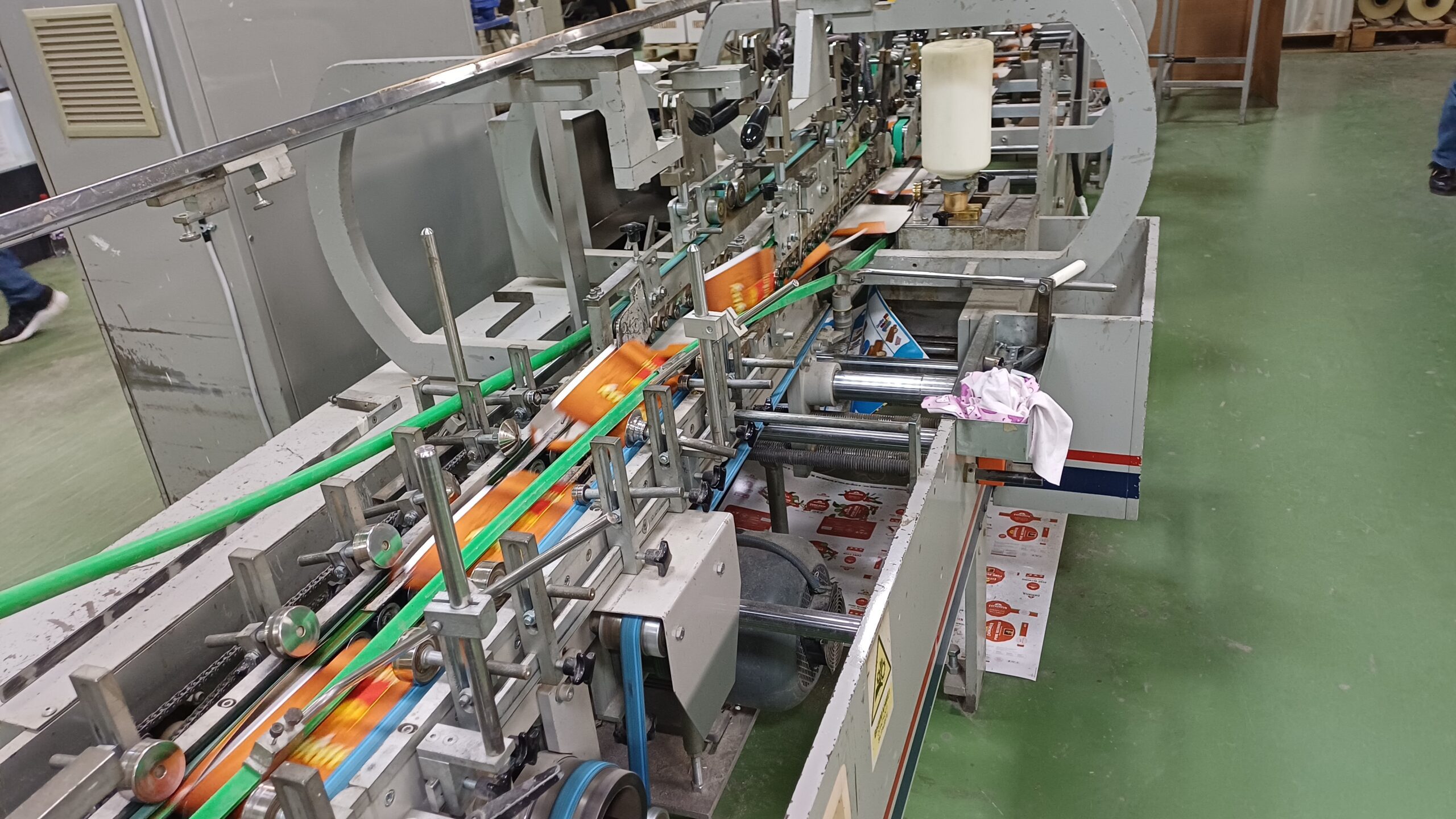
Here we have precise folding along pre-creased lines, controlled adhesive application, and high speed of gluing.
The goal is to produce cartons that will open and close correctly, will maintain structural integrity, will assemble easily on packing lines and will meet brand and regulatory requirements.
We can say that this step is where design meets real-world functionality.
Common Folding Carton Styles
Straight-Line Cartons
- Single glue line
- Simplest and most common style
- High production speed
Used for:
Cosmetics, pharmaceuticals, food packaging
Crash-Lock / Auto-Bottom Cartons
- Pre-glued bottom structure
- Automatically locks when opened
Benefits:
- Faster packing
- Higher bottom strength
- Reduced labor at filling stage
Used for:
Retail boxes, heavier products
4-Corner & 6-Corner Cartons
- Multiple glue points
- Complex folding sequence
Used for:
Premium packaging, tray-style cartons
Sleeves & Wraps
- Minimal gluing
- High visual impact
- Cost-efficient designs
Used for:
Promotional packaging, food sleeves
In packaging production, good gluing is invisible—but bad gluing is instantly obvious.
Window Patching as a Specialized Postpress Process
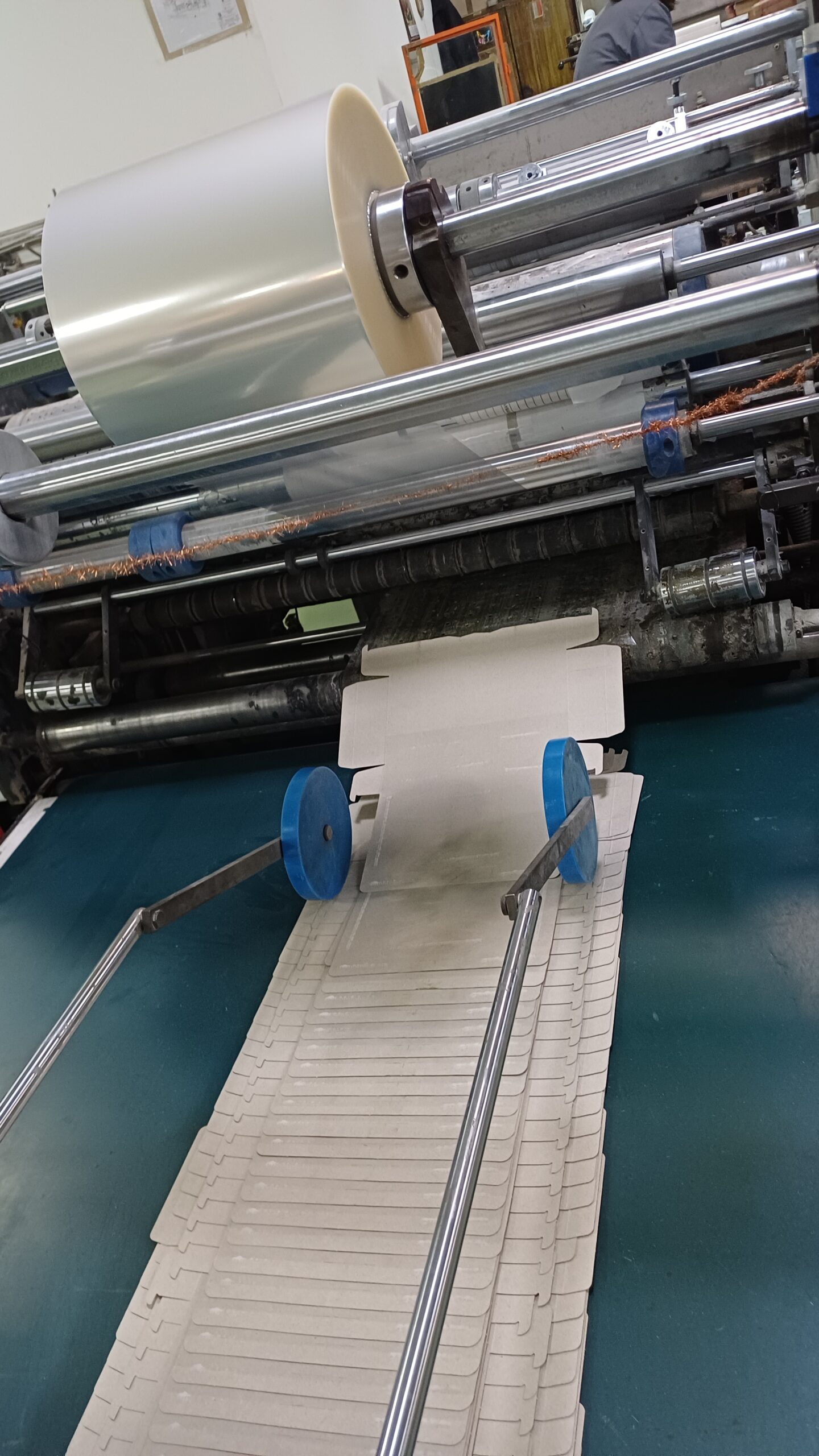
Window patching is a postpress operation in which a transparent film window is applied to a die-cut opening in a folding carton.
This process allows the consumer to see the product while maintaining package protection and structural integrity.
In offset printing workflows, window patching is performed after printing and die cutting, and typically before or inline with folding and gluing on specialized folder-gluer or window-patching machines.
Purpose of Window Patching
Window patching combines visual transparency with functional protection.
Key objectives:
- Product visibility at point of sale
- Protection against dust and contamination
- Brand differentiation
- Improved consumer trust
- Compliance with food and retail standards
This process is widely used in food, cosmetic, pharmaceutical, and retail packaging.
Window film that is used can be from PET (polyester), PVC, OPP/BOPP film or Cellulose-based films.
From Ink on Paper to a Product in Hand
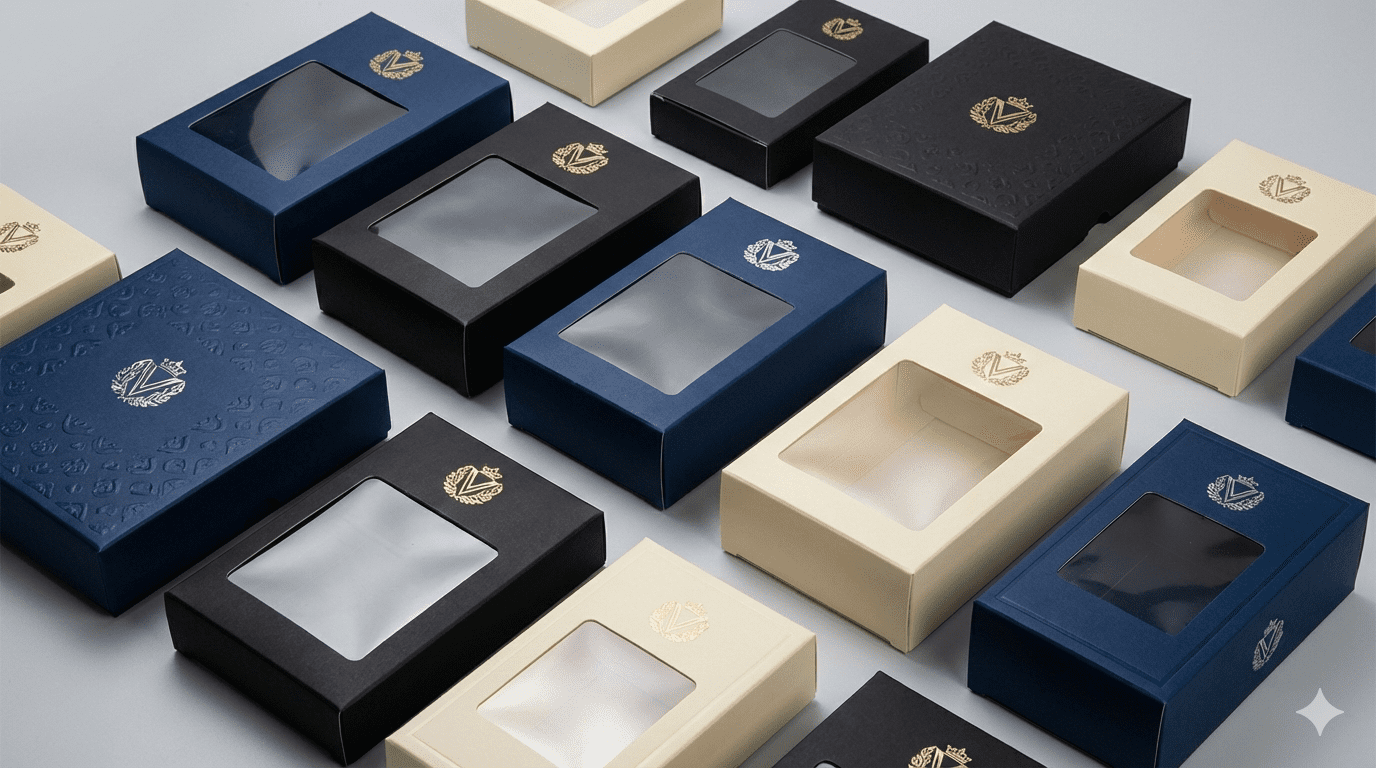
Postpress isn’t just the “last stop” on the factory floor—it’s where the real magic happens.
This is the moment a simple printed sheet transforms into a premium, tactile product that someone actually wants to hold.
Why the “Finish” is the Start of the Sale
In a crowded market, value is created long after the ink is dry. It’s the details that tell the story:
- The Texture: The satisfying feel of a deep emboss or a soft-touch coating.
- The Shimmer: The way light catches a gold foil logo or a high-gloss UV accent.
- The Precision: The clean, sharp “snap” of a perfectly die-cut and folded box.
These aren’t just technical steps; they are the signals of quality that customers pick up on before they even read a single word of copy.
A Strategic Mindset
The most successful brands don’t treat finishing as an afterthought.
They see it as a strategic advantage.
By prioritizing postpress, you aren’t just completing a job—you’re ensuring a stronger shelf presence, smoother workflows, and a product that feels “luxury” the second it’s touched.
As technology and automation continue to evolve, one thing remains certain: The future of high-quality print doesn’t just depend on how well we print—it depends on how thoughtfully we finish.
Frequently Asked Questions About Postpress
What is the difference between AQ coating and UV coating?
Aqueous (AQ) coating is a water-based, eco-friendly varnish typically applied inline for basic protection, fast drying, and smooth processing. UV coating is a liquid cured instantly by ultraviolet light, providing an extremely high-gloss, premium finish with superior abrasion resistance, often used for spot highlights.
Why is creasing necessary before folding cardboard?
Creasing compresses the paper fibers along the fold line without cutting them. This prevents the substrate and the applied ink/coatings from cracking when folded, ensuring structural integrity and a clean, professional edge on the final packaging.
What does “blind embossing” mean in print finishing?
Blind embossing is a mechanical process that uses a die to create a raised, 3D shape on the paper without applying any ink or foil over the embossed area. It relies entirely on texture, light, and shadow to create a subtle and elegant visual effect.