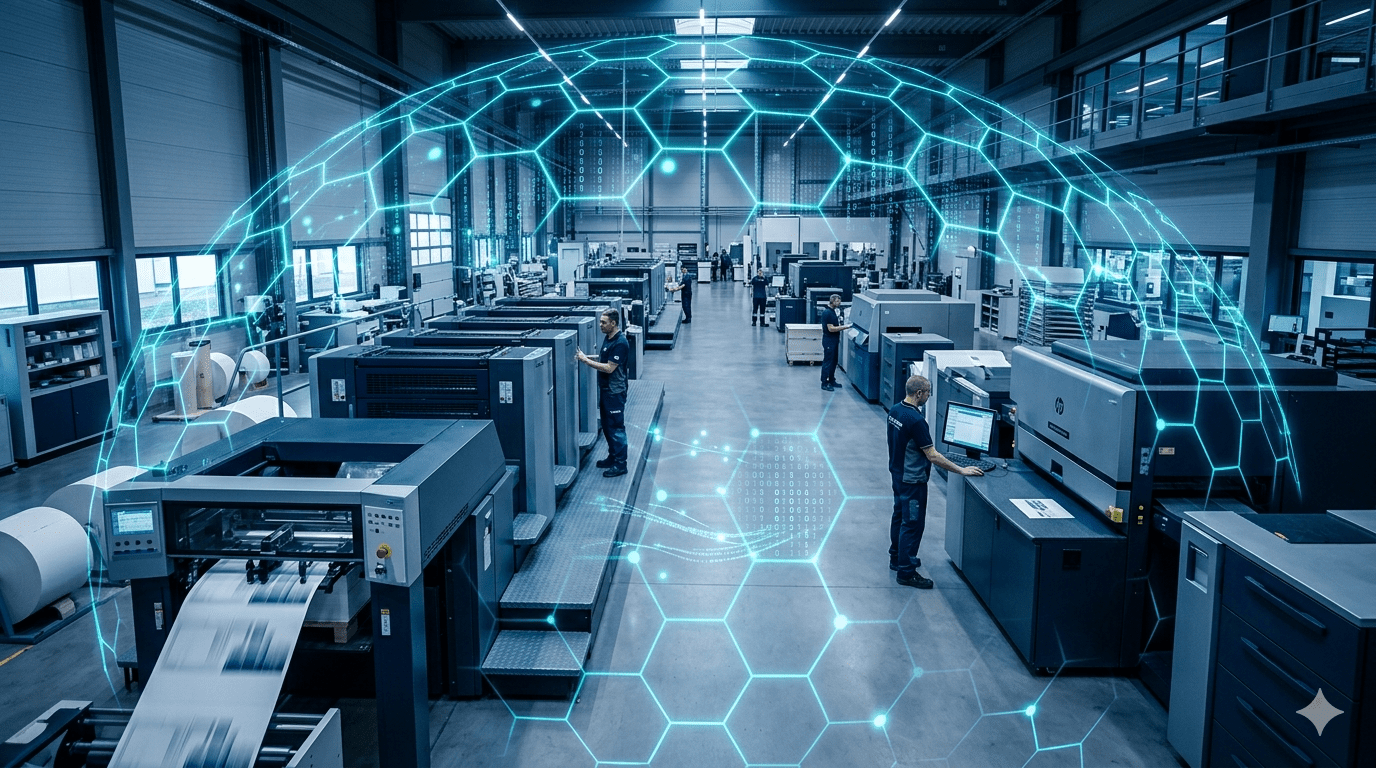
There has been a quiet but big change in the printing business.
What used to be a mostly mechanical, stand-alone process is now a highly connected, software-driven environment.
Cloud-based workflows, IoT-enabled devices, remote management systems, and integrated production pipelines are all important parts of modern print operations.
This change, which is often called “smart printing,” has made things more efficient, customisable, and scalable.
But being connected also means being exposed.
Print environments are getting less safe as they go more digital.
Cybersecurity is no longer just something that IT companies or banks worry about.
It is now very important for all types of print businesses.
The Hidden Risks Behind Smart Printing
The print infrastructure of today is very interconnected.
Printers talk to servers, prepress systems talk to cloud platforms, and production data moves across networks in real time.
This connectivity makes people more productive, but it also makes them more vulnerable to attacks.
Some of the most common risks are:
• Getting into print devices and servers without permission
• Getting data while files are being sent
• Ransomware attacks that focus on production workflows
• Hacked printers with IoT capabilities that serve as entry points
• Stealing intellectual property from sensitive print files
A lot of the time, print companies don’t take these risks seriously enough.
People often think of printers as tools for doing work instead of networked devices.
But like any other device, they can store data, run software, and connect to other systems.
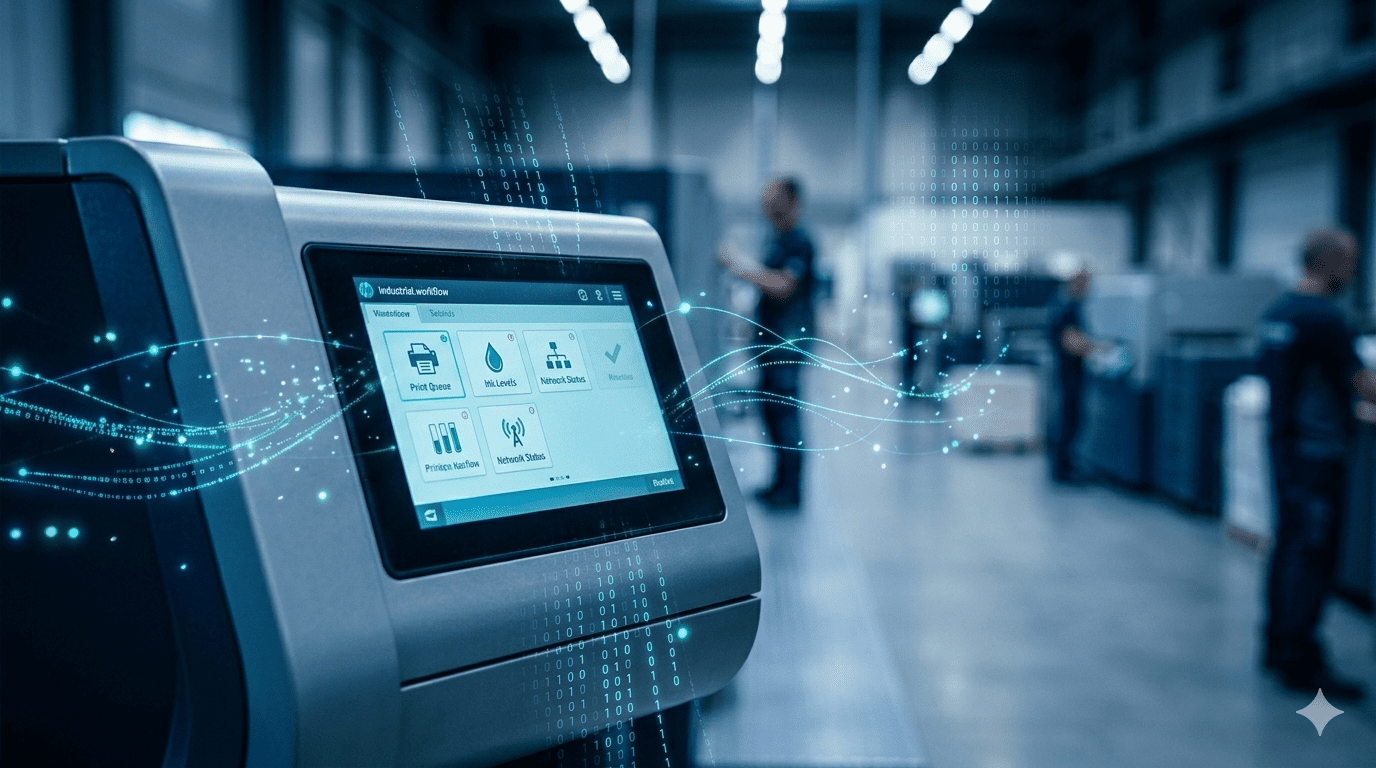
Why Traditional Security Approaches Fall Short
A lot of companies still use cybersecurity solutions that aren’t all in one place.
They have different tools for protecting against viruses, firewall protection, endpoint security, and network monitoring.
Each of these serves a purpose, but managing them separately leaves gaps.
Those gaps can be expensive in a smart printing setting.
It’s hard to do the following when systems aren’t connected:
• Find threats in real time
• Connect activity across devices
• Act quickly when something goes wrong
• Keep security policies the same all the time
The end result is a reactive approach to cybersecurity that only finds threats after damage has already been done.
Enter the Unified Cybersecurity Platform

More and more print companies are using a Unified Cybersecurity Platform to deal with these problems.
This integrated method combines all security functions into one system that works together.
A unified platform protects the whole print ecosystem instead of relying on a bunch of separate tools.
This includes:
• Security for printers, workstations and servers at the end of the queue
• Keeping an eye on the network to find strange behaviour
• Threat intelligence to find new risks
• Systems that automatically respond to attacks to stop them quickly
• Ways to protect data that keep sensitive files safe
The main benefit is that it is easy to see. Businesses can see and control all of their security systems from one place with a unified platform.
The Business Impact of Better Security
A full cybersecurity strategy is more than just stopping attacks; it’s also about making sure the business can keep going and building trust.
For print providers, the benefits are:
- Reduced downtime from cyber incidents
- Protection of client data and intellectual property
- Improved compliance with data security regulations
- Greater operational reliability
- Enhanced reputation and customer confidence
In an industry where deadlines are tight and profit margins are small, even one problem can have big effects.
This uncertainty goes away when there is strong cybersecurity.
Preparing for the Future of Print
Smart printing is still a long way from being fully developed.
The need for strong cybersecurity will only grow as automation, AI-driven workflows, and cloud integration become more common.
Print companies that take a proactive approach now are more likely to do well in a market that is becoming more digital.
Both cyber threats and countermeasures are growing more and more complex.
The objective is to have the right kind of protection—one that is intelligent, integrated, and made to deal with the complexity of contemporary print environments.