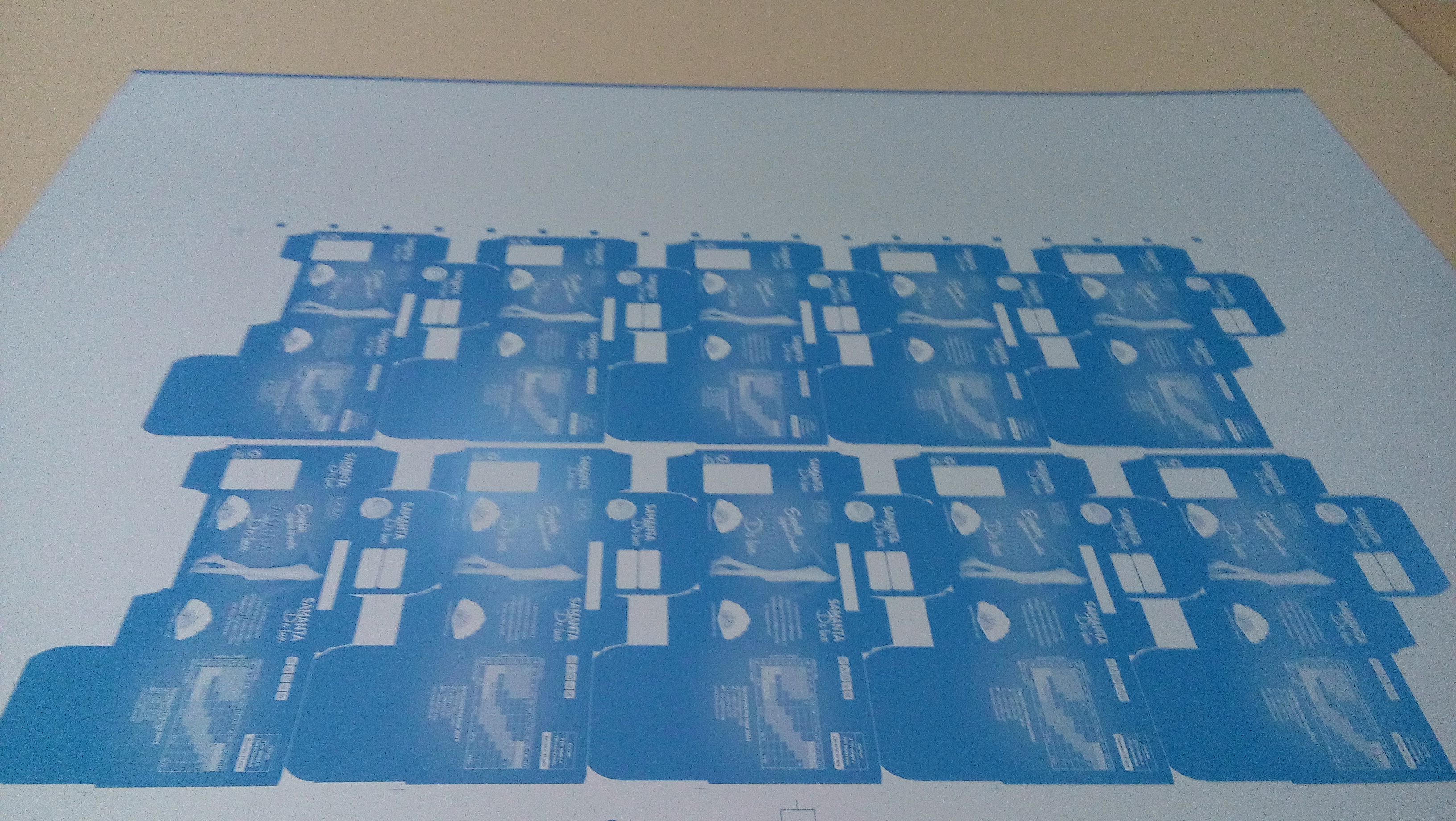
Offset printing plates must have ability to transfer an image to paper, cardboard or other substrates.
In modern lithography, the offset printing plate is a high-precision, planographic carrier engineered to selectively transfer a split ink film to the blanket cylinder based on strict surface chemistry configuration.
Modern offset printing plates use a thin, flexible aluminum substrate (typically 0.15mm to 0.30mm in gauge) designed for secure, rapid mounting onto the plate cylinder.
Drawing on years of experience in the graphic arts industry, as well as in prepress, we know that plate performance is entirely dependent on creating a definite, stable contrast between the areas of the image that receive ink (oleophilic) and the areas that do not receive water (hydrophilic).
Plate Substrates and Imaging Chemistry
Selecting and managing the correct plate morphology determines the run-length stability, dot reproduction fidelity, and chemical resistance on the press.
Use this structural breakdown for baseline prepress diagnostics.
| Plate Core Material | Surface Micro-Topography | Photo-Chemical Reaction Type | Primary Application & Run-Length |
| Anodized Mono-Metal Aluminum | Electrochemical graining via dynamic nitric/hydrochloric acid bath with subsequent electrochemical oxidation. | Negative-Working: Actinic UV/Thermal laser radiation induces polymer cross-linking (hardening) in image areas. | Standard commercial sheetfed and web offset. High durability, supporting up to 100,000+ impressions unbaked. |
| Anodized Mono-Metal Aluminum | Electrochemical graining via dynamic nitric/hydrochloric acid bath with subsequent electrochemical oxidation. | Positive-Working: Laser exposure causes molecular decomposition (solubilization) of the pre-coated polymer layer. | Premium packaging and high-resolution commercial work. Exceptional dot sharpening characteristics. |
| Waterless (Toray System) Plates | Multi-layer composite base utilizing an ink-repellent silicone rubber top coat over a photopolymer foundation. | Localized laser ablation or chemical removal of the silicone layer to expose the underlying ink-receptive polymer. | High-fidelity waterless printing. Eliminates dampening solution entirely; ideal for ultra-high-resolution screening. |
Deep-Dive Technical Analysis for Offset Printing Plates: From Electrochemical Anodizing to Laser Exposure
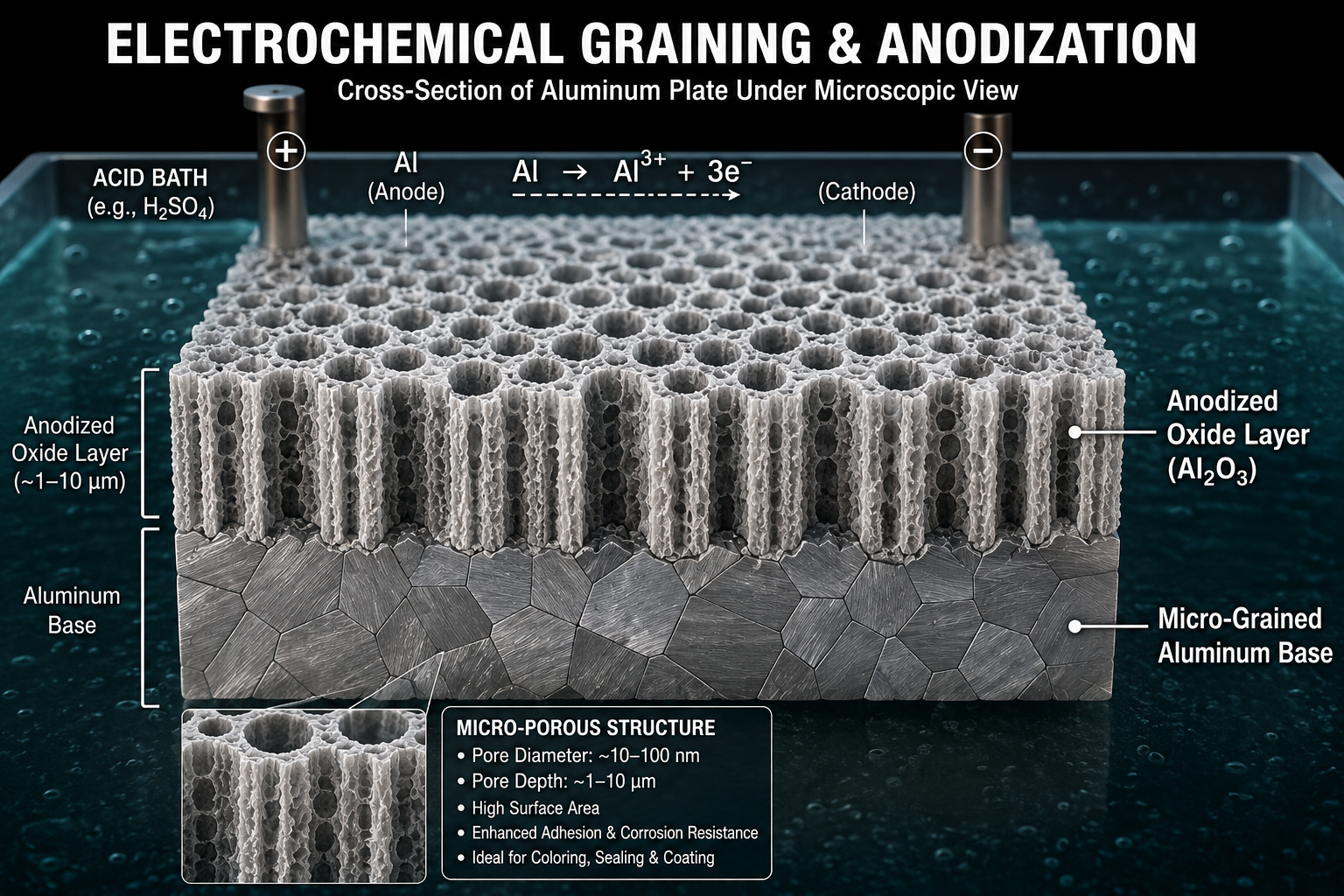
Micro-Topography Engineering: Electrochemical Graining and Anodizing
Historically, aluminum surfaces were mechanical grained using sand-blasting or wet brushing methods, which lacked spatial uniformity.
Today, premium offset plates undergo a continuous electrochemical graining process in an acidic electrolyte bath (nitric or hydrochloric acid), creating a complex, controlled micro-porous structure.
This is followed immediately by anodizing (electrochemical oxidation), which transforms the raw aluminum surface into a highly durable, wear-resistant aluminum oxide layer.
This optimized micro-topography provides a dual function: it provides an anchor matrix for the 1.0 micron light-sensitive polymer coating while maximizing the surface energy required to hold a stable, microscopic dampening water film during press idle cycles.
2. Photochemical Kinetics: Negative vs. Positive Exposure Mechanisms
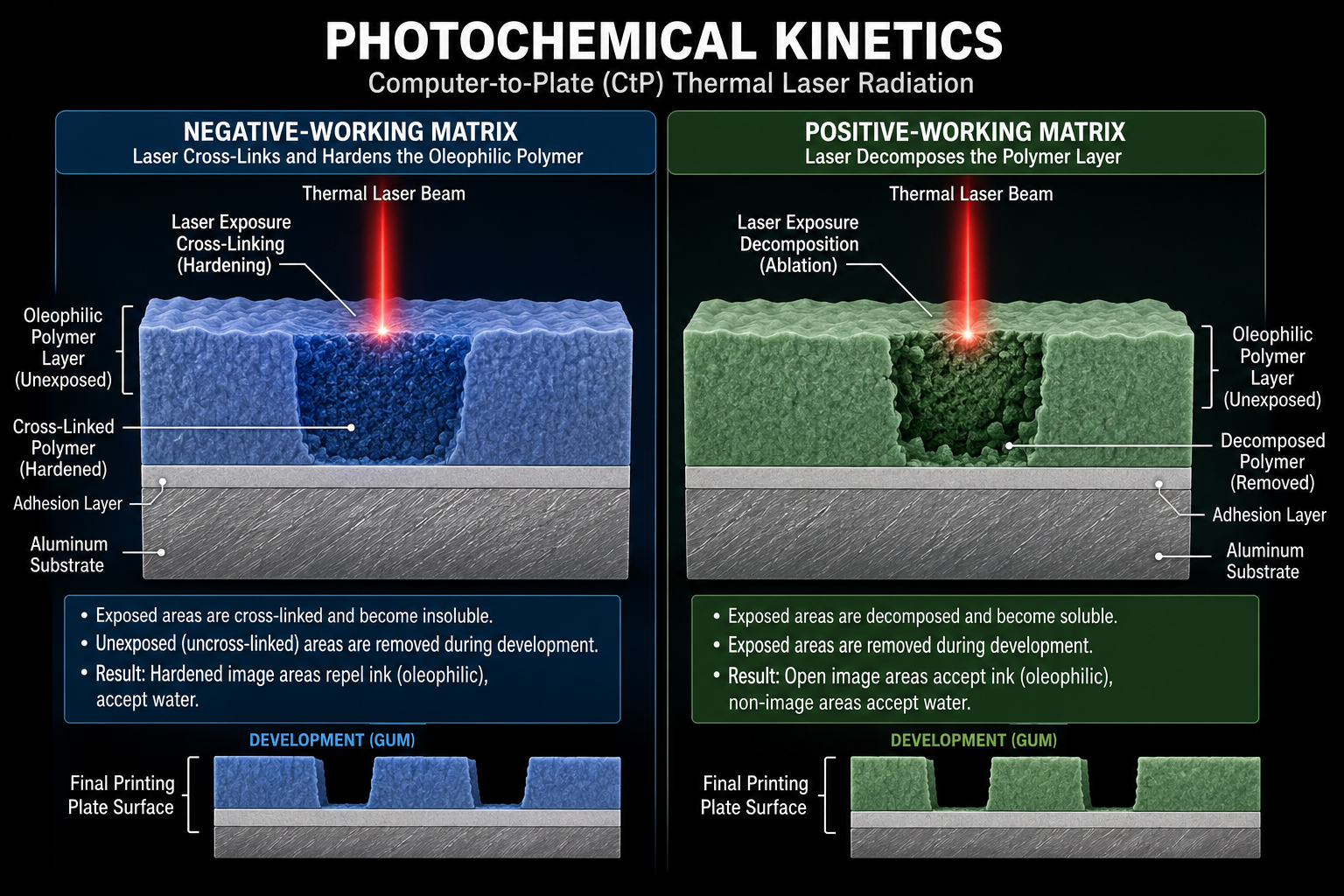
The imaging layer applied to the aluminum base determines how the plate responds to Computer-to-Plate (CtP) thermal or violet lasers.
Negative-Working Mechanism: The pre-coated diazo or photopolymer layer reacts to actinic light via radiation-induced polymerization.
The laser strikes the intended image elements, causing polymer cross-linking that renders the zone completely insoluble to alkaline developers.
The unexposed, non-image coating is washed away, leaving the hardened, oleophilic image intact.
Positive-Working Mechanism: The laser strikes the non-image zones.
The exposure causes immediate chemical decomposition, breaking down the polymeric chains to make them highly soluble in the developer solution.
The unexposed areas remain on the plate, serving as the ink-accepting image elements.
Prepress operators must utilize specialized control scales (such as Ugra/Fogra digital strips) to systematically monitor laser exposure energy and control dot-reproduction limits.
3. Waterless Lithography: Silicone Inversion and Mechanical Stability
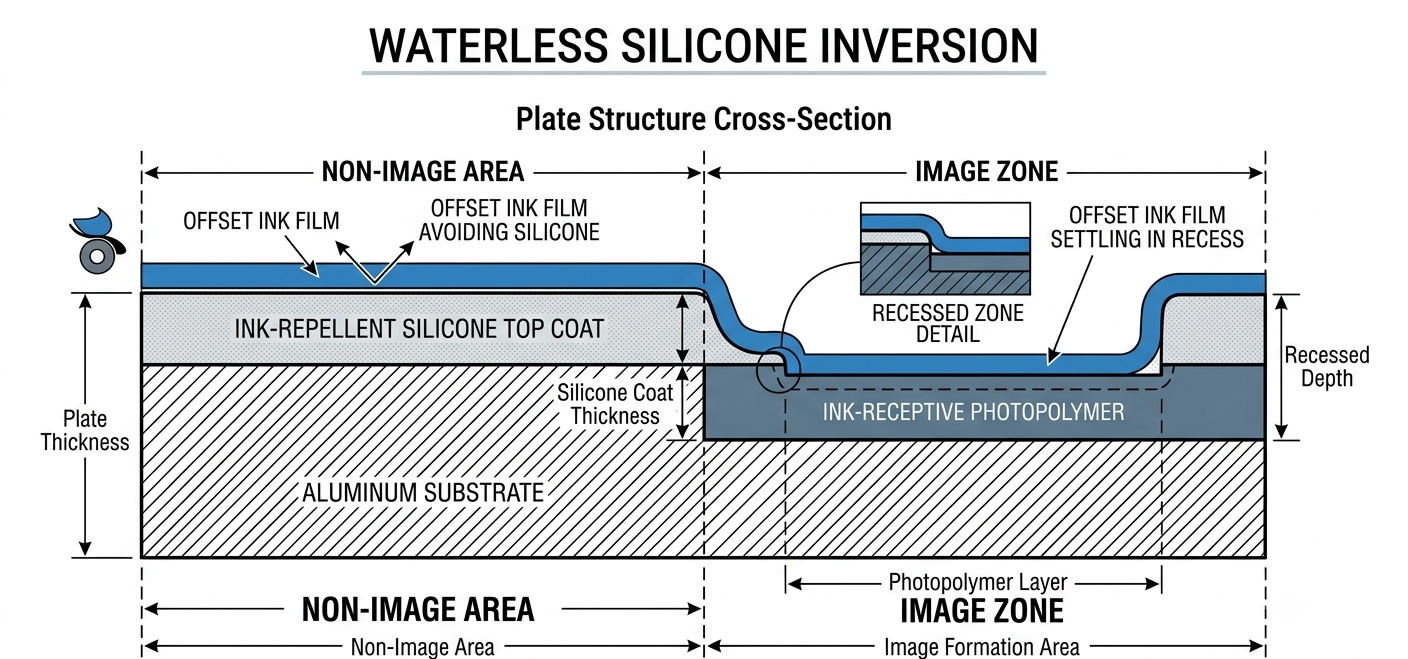
Waterless offset printing plates completely reinvent classic lithographic physics by eliminating the fountain solution system entirely.
Instead of relying on a chemical ink-water balance, these plates utilize an engineered “silicone rubber coating” that possesses an exceptionally low surface energy, naturally repelling standard offset inks.
During CtP imaging, the laser removes or disrupts the silicone layer precisely in the image zones, revealing the highly oleophilic photopolymer matrix beneath it.
Because the ink collects in these slightly recessed, exposed zones, the printed dot is held securely without the physical shearing or dynamic slurring caused by fountain solution emulsification.
4. Environmental and Quality Impacts of Fluid Elimination
Removing the dampening solution delivers profound operational advantages.
Paper stretch—the primary cause of mechanical color registration errors caused by the absorption of water into the cellulose fibers—is drastically reduced.
This allows for immediate mechanical registration during make-ready, shrinking paper waste factors significantly.
Furthermore, eliminating fountain chemistry cuts out critical pressroom toxins, reduces volatile organic compound (VOC) emissions, and allows press operators to run higher solid ink densities, achieving bold, high-contrast colors across ultra-fine halftone screen patterns.