
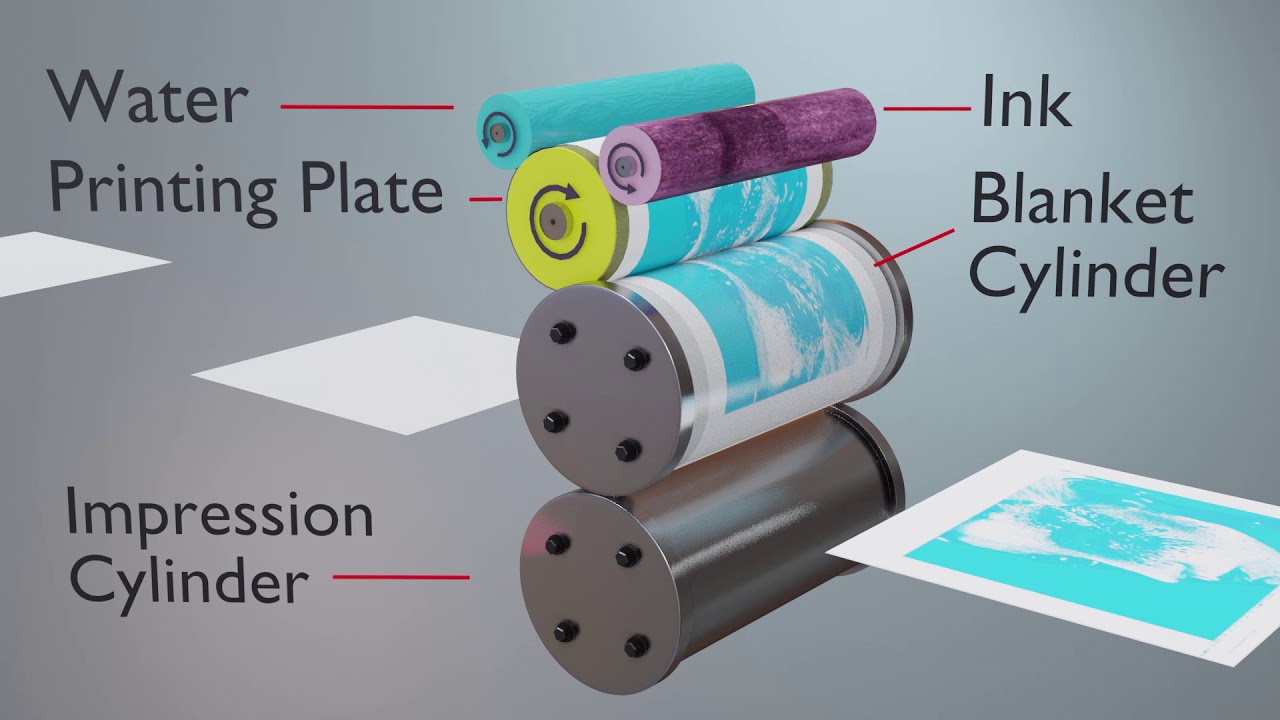
In the offset printing process, offset printing blankets play a crucial role in determining the quality of the printed image.
Acting as an intermediary between the printing plate and the substrate, a high-performance elastomeric blanket must instantly absorb mechanical shocks, transfer a precise micron-level film of ink, and release the substrate without distortion at speeds exceeding 15,000 sheets per hour.
Therefore, the construction of the blanket is vital, as it must meet high demands for quality and performance under various operating conditions.
The effectiveness of the blanket in offset printing not only affects image transfer but also the machine’s speed, paper handling, and overall print quality.
Key Specifications and Properties of Printing Blankets
1. Tensile Strength
The tensile strength of a printing blanket refers to its ability to withstand the forces exerted during the printing process, particularly the tension around the cylinder.
Blankets should be tightened just enough to prevent movement during the run, avoiding excessive tension that could lead to:
- Tears and rips: Overstretching the blanket may cause it to rip, leading to costly downtime and potential damage to the printing press.
- Height loss: Increased torque on a tightly mounted blanket can reduce its thickness, affecting print quality.
2. Solvent Resistance
Offset printing involves the use of various chemicals, such as inks and dampening solutions.
A high-quality blanket must resist swelling, cracking, or distortion when exposed to these substances.
If the blanket fails in this area, the result will be a distorted image, leading to poor print quality.
3. Caliper Consistency
The caliper, or thickness, of the blanket must be consistent across its surface.
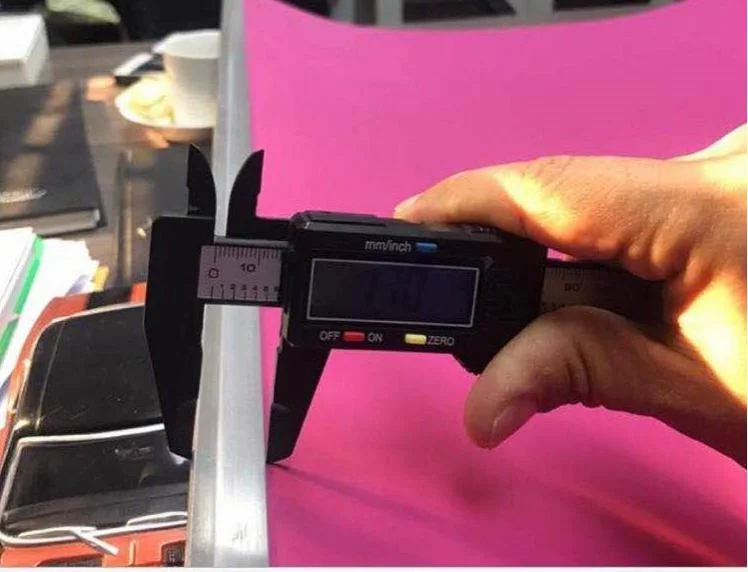
It is essential to check the blanket’s caliper at all four corners before installation.
Acceptable tolerance is typically within ±0.001 inches. Inconsistent caliper can lead to issues such as:
- Dot gain: Excessive thickness can cause ink spread, leading to blurry images.
- Tension problems: Irregular caliper may create uneven tension, resulting in mechanical issues during printing.
4. Compressibility
Compressibility is arguably the most critical factor affecting a blanket’s performance.
It refers to the blanket’s ability to reduce in volume under pressure and then recover its original shape.
The right level of compressibility ensures:
- Optimal print pressure: Prevents excessive pressure that could wear out the press, blankets, and plates prematurely.
- Durability: Helps the blanket withstand smashes without affecting print quality.
- Efficiency: Reduces make-ready times, allowing for quicker setups and less waste.
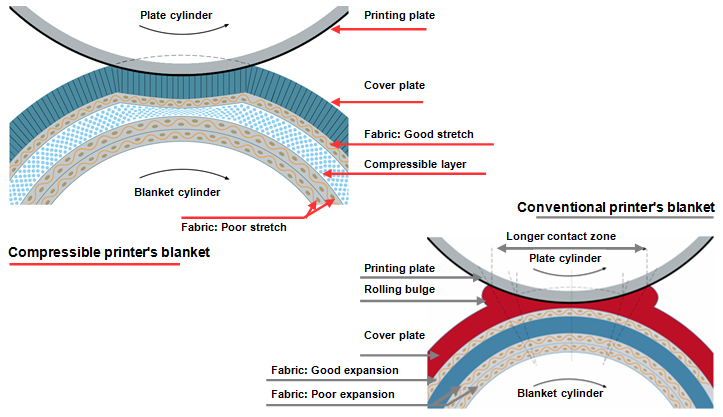
Source: Series of articles on factors influencing quality in offset printing (Part 2)
5. Surface Release
The surface texture of the blanket directly impacts ink release.
Generally, smoother blankets produce better image reproduction, but they may struggle to release ink effectively.
A balance between smoothness and texture is necessary to ensure both high image quality and efficient ink transfer.
6. Stretch
Blankets usually contain a fabric layer designed to provide strength, particularly in the circumferential direction.
During installation, some stretching is expected as the threads adjust.
However, over-tightening can:
- Reduce blanket height: Leading to potential image distortion.
- Cause tears: Excessive stretching may rip the blanket, necessitating costly replacements.
7. Squareness
It is critical that the blanket is cut squarely to fit the press correctly.
If the blanket is not square, it can lead to tension imbalances and slurring of the image.
Always perform a quality check before mounting the blanket on the press to avoid such issues.
Components of an Offset Printing Blanket
Modern offset blankets are not simple pieces of rubber; they are highly engineered, multi-layered composites designed for specific chemical and mechanical environments.
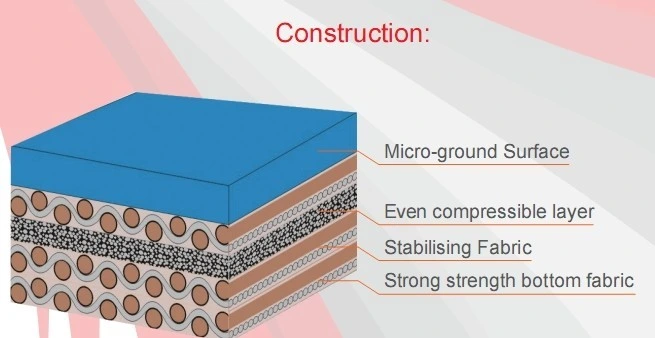
1. Blanket Surface
The surface of the offset blanket is vital for printing performance.
The top layer, typically a synthetic rubber blend (like Nitrile) is engineered to resist the specific chemistry of inks and fountain solutions.
The surface finish (either buffed/ground for better dot sharpness or cast for smoother solids) dictates ink transfer efficiency and quick paper release (quick release feature)
The surface must:
- Absorb ink efficiently: Capture as much ink as possible from the plate without distorting the image.
- Transfer ink precisely: Deliver the ink to the substrate accurately, even at high speeds.
- Minimize contamination: Maintain low tack to reduce the buildup of paper dust, dirt, and excess ink.

2. The Compressible Layer (Microspheres)
Positioned just below the surface, this layer contains millions of microscopic, gas-filled cells.
When the blanket hits the impression cylinder, these spheres compress within their own volume rather than bulging out to the sides.
This eliminates dot slurring and absorbs the impact of multiple paper thicknesses or accidental creases (smash resistance).
The Fabric Carcass (Substrate)
Multiple layers of woven cotton or synthetic fabrics bound together by adhesive rubber.
The carcass provides the blanket’s structural integrity, tensile strength, and prevents it from stretching continuously once tensioned on the press cylinder.
Blanket Packing: The Mathematics of Squeeze (Pressure)
Measuring Undercut: Every cylinder has a specific undercut (the distance from the bearer ring to the cylinder body).
The packing materials (calibrated foils or specially treated paper) must bring the blanket precisely to—or slightly above—bearer height, depending on the machine manufacturer’s specifications.
Calculating Squeeze: True printing pressure is achieved when the combined thickness of the blanket and its packing exceeds the available gap between the cylinders by a specific amount (usually between 0.10 mm to 0.15 mm for standard commercial work).
The Danger of Overpacking: Excessive packing increases friction, leading to rapid plate wear, excessive dot gain, heat buildup, and premature blanket failure (loss of compressibility).
Conclusion
In offset printing, the choice of blanket significantly influences the overall cost-effectiveness of the process.
By focusing on the blanket’s key specifications—tensile strength, solvent resistance, caliper consistency, compressibility, surface release, stretch, and squareness—printers can achieve optimal performance and high-quality prints.
Additionally, understanding the construction of the blanket, particularly the surface and carcass, ensures a more informed selection process that balances cost and quality.
Ultimately, it’s not just the cost per blanket that matters but the cost per copy.
A high-quality blanket can lead to more consistent results, fewer press adjustments, and longer-lasting equipment, making it a worthwhile investment for any offset printing operation.
Frequently Asked Questions: Offset Blankets & Packing
Quick technical answers for pressroom troubleshooting and blanket maintenance.
1. What causes an offset blanket to “smash” and can it recover?
A blanket smash occurs when multiple sheets of paper, a folded corner, or foreign objects pass between the cylinders, crushing the blanket’s internal structure. While high-quality compressible blankets with advanced gas-filled microspheres can “bounce back” from minor indentations, a severe mechanical smash permanently ruptures the cell structure, requiring immediate blanket replacement to avoid blank spots in the print.
2. What is the difference between a buffed and a cast blanket surface?
A buffed surface is mechanically ground during manufacturing to create a specific micro-roughness. This texture carries fountain solution efficiently and provides excellent halftone dot sharpness, ideal for high-end commercial lithography. A cast surface is exceptionally smooth, offering superior “quick release” properties for paper webs and delivering flawless, dense solid ink areas, which is heavily preferred in packaging and cartonboard printing.
3. How do I calculate the correct packing thickness for my blanket cylinder?
Correct packing thickness is calculated by adding the exact measured thickness of your new blanket to the thickness of your packing foils or paper, and then subtracting the manufacturer’s specified cylinder undercut. The resulting positive number is your “squeeze” (printing pressure), which typically ranges from 0.10 mm to 0.15 mm for standard commercial presses. Always use a high-precision micrometer for these measurements.
4. Why does my printing blanket become “glazed” over time?
Blanket glazing is the hardening and smoothing of the elastomer surface caused by the gradual buildup of dried ink resins, paper coating dust (calcium), and chemical residues from fountain solutions. Glazing destroys the blanket’s micro-porosity, leading to poor ink transfer, chemical mottling, and web-tension issues. Regular maintenance using deep-cleaning deglazers and calcium washes is essential to prolong blanket life.