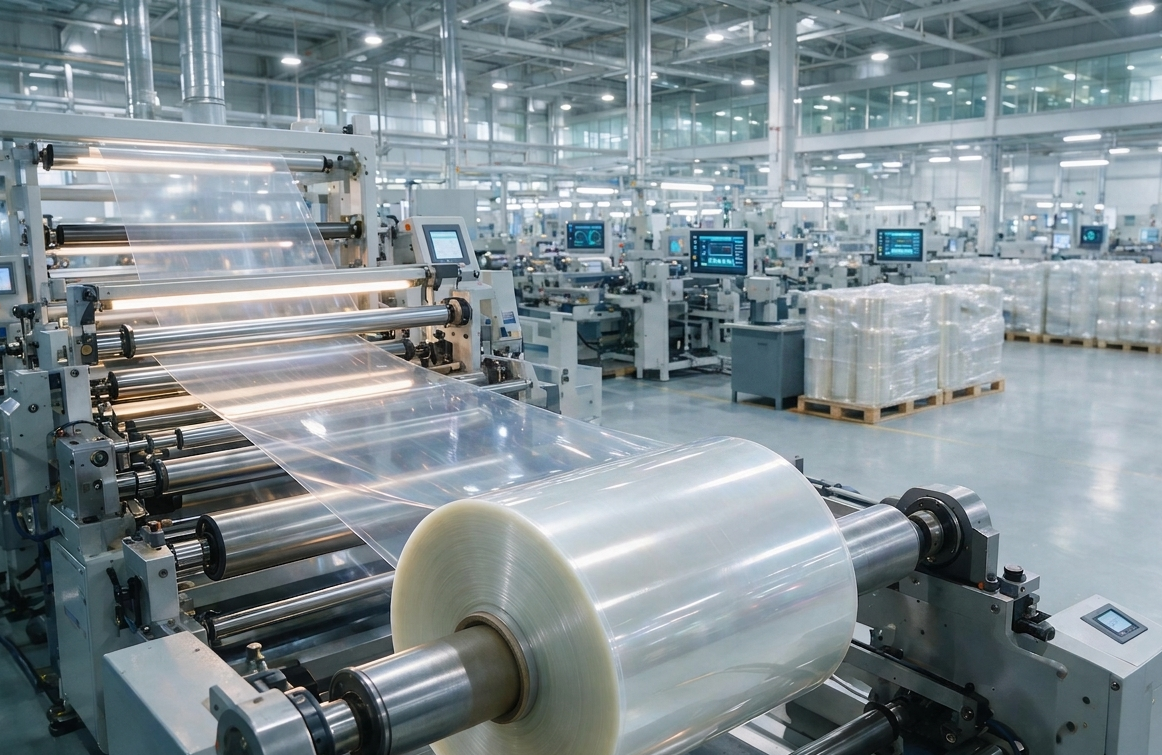
In the demanding landscape of modern heat transfer printing, the PET release film is much more than a temporary carrier medium—it is a critical engineering component that significantly influences the final quality of your product.
For production managers aiming to maximize efficiency and press technicians striving for consistent daily application, selecting the appropriate film for your specific workflow is paramount.
The decision goes far beyond simply ordering a standard roll of clear film.
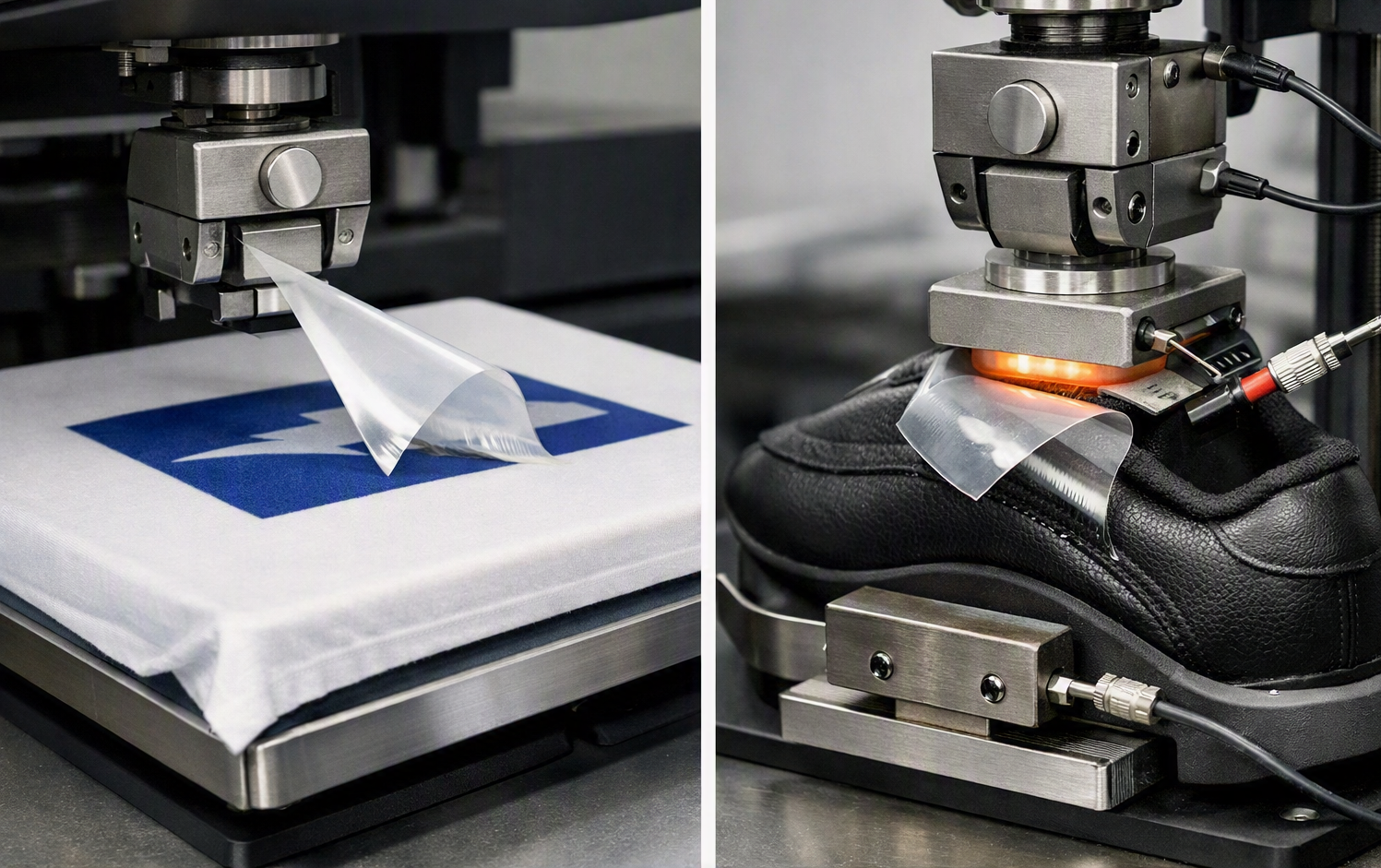
Achieving consistent, high-fidelity transfers across varied substrates—from standard cotton apparel to curved footwear surfaces—requires careful technical management.
Industry professionals must balance three core variables: release coating chemistry, peel temperature dynamics, and base material thickness.
This guide breaks down these precise specifications to help you optimize your transfer process from the production floor to the final heat press.
PET as a Thermal Carrier
Polyethylene terephthalate (PET) is the standard carrier substrate in heat transfer printing for three practical reasons.
It holds its shape during heating, has the tensile strength to run smoothly on roll-to-roll presses, and provides a highly smooth surface for precision release coatings.
During the manufacturing process, PET film is stretched in both directions (biaxially oriented).
For print operators, this simply means the film naturally resists shrinking and curling.
This structural stability is exactly what you need to maintain tight registration on multi-pass print jobs and to ensure the transfer lays completely flat under the heat press.
Throughout the entire production cycle, the PET film acts as a protective carrier that must survive a demanding journey:
- Stage 1: It is coated, dried, and printed on at moderate room temperatures.
- Stage 2: It is compressed under a heat press at extreme temperatures (typically ranging from 120°C to over 200°C) and high pressures for several seconds.
- Stage 3: Finally, it is peeled away to leave the clean graphic on the final product.
Each of these stages places immense physical stress on the film.
When print shops choose the wrong PET film, the material itself rarely snaps or breaks.
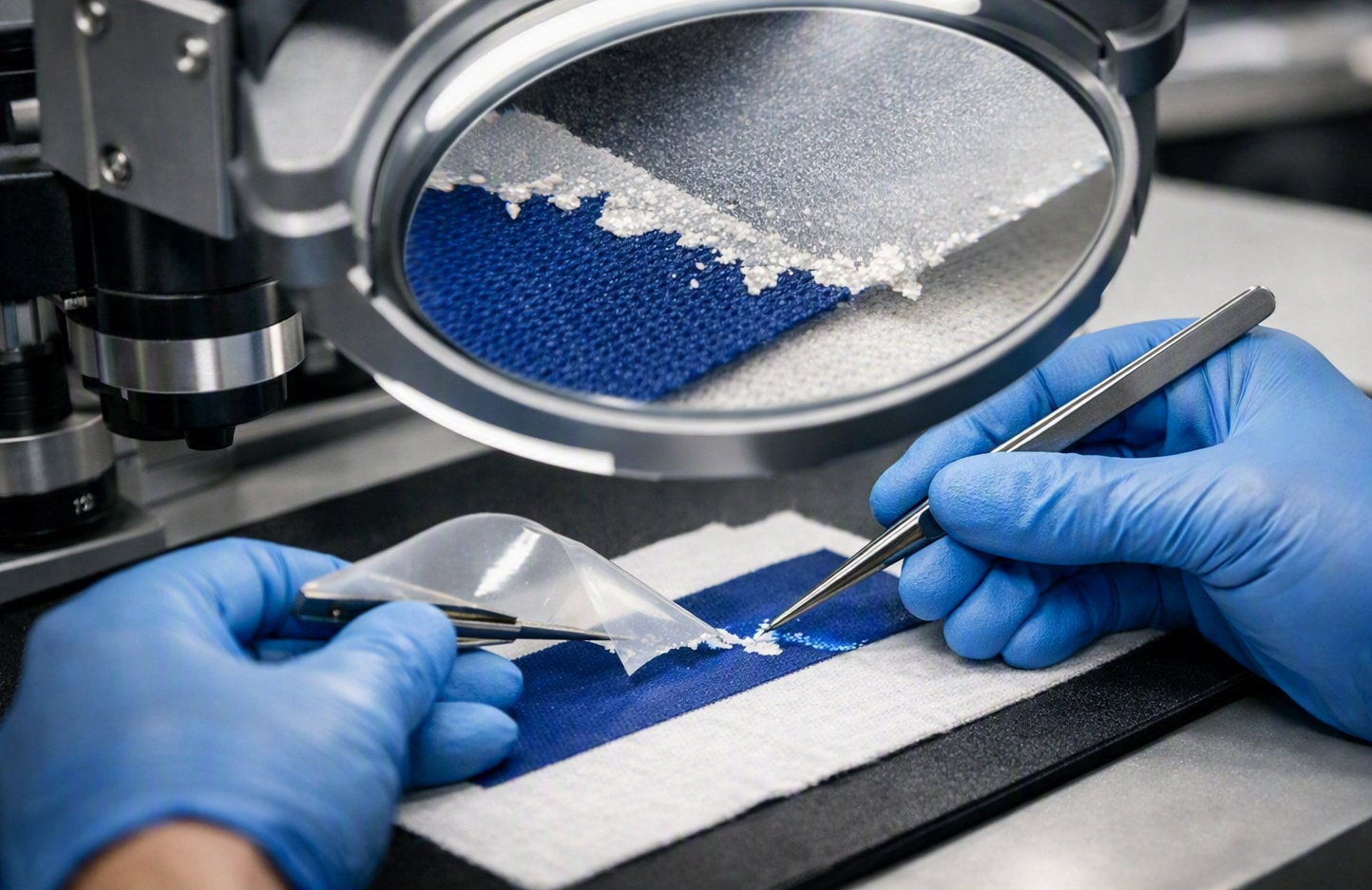
Instead, the failure shows up as costly print defects during one of these three stages—such as curled edges under the press, registration shifts during printing or jagged ink tearing during the final peel.
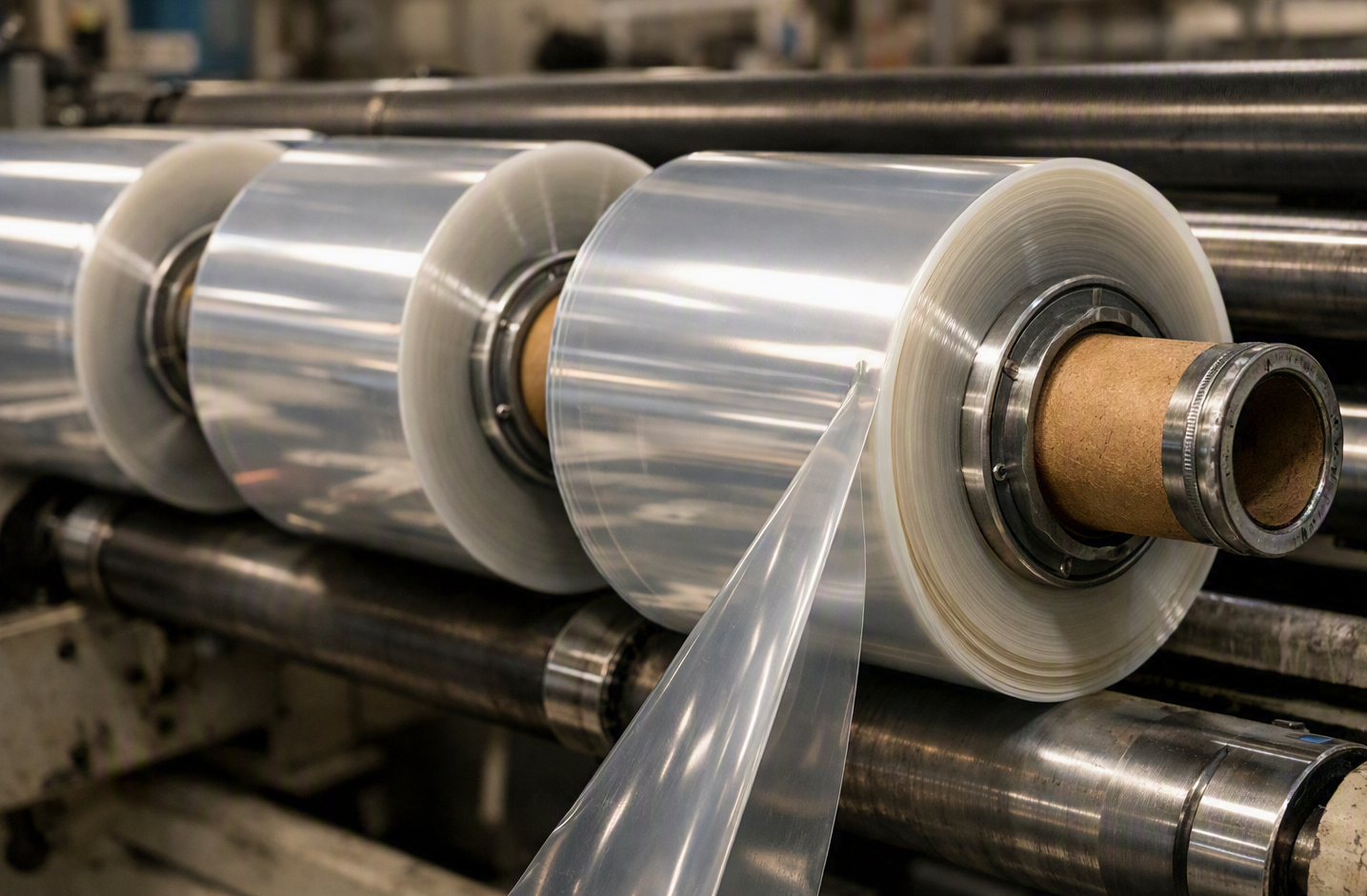
Chemistry of Release Layers: Silicone vs. Non-Silicone
Silicone Release Systems
PET carrier films may use silicone-based or specialized non-silicone release systems depending on the specific ink, adhesive, desired peel window, finish, and process conditions.
For many applications, a silicone-based coating is used.
While chemists refer to these as “PDMS” or “silicone emulsions,” for press operators, this layer acts much like a highly specialized, heat-resistant non-stick varnish.
The secret to a clean transfer lies in what engineers call “surface energy”.
Think of the silicone coating as having a very low grip.
When you print on the film, the ink and adhesive sit on top of it.
During the heat-press process, those inks and adhesives develop a much stronger bond to the final product (such as a t-shirt, footwear panel, or industrial substrate) than to the slippery silicone film.
As a result, the printed image transfers cleanly and detaches from the carrier without tearing.
This specific level of grip—known as the “peel force”—is carefully engineered during the film’s manufacturing.
If the silicone coating is formulated to be too slippery, the ink might release prematurely while feeding through the printer or during roll-to-roll handling.
If it grips the ink too tightly, the image could stretch, tear, or leave residue behind when you peel the film off after pressing.
Finally, these silicone coatings are built to survive the aggressive environment of a heat press.
They remain highly stable at typical operating temperatures with minimal potential for outgassing or residue transfer.
This consistent reliability under high heat makes the PET-plus-silicone combination a highly popular and effective choice for many thermal transfer applications.
Non-Silicone Alternatives
Depending on the desired finish and process speeds, specialized non-silicone release systems (such as fluorocarbon or wax-based coatings) are also widely used.
These are typically chosen when a print shop needs a very specific finish (like high gloss) or wants to maximize production speed with a very fast hot-peel process.
In some formulations, they can also be more cost-effective per roll.
However, these benefits come with a tradeoff.
Non-silicone coatings generally have different heat resistance profiles, their shelf life in the warehouse can vary, and they often perform differently when retaining very fine, intricate design details.
If you are moving away from a standard silicone film, you need to rigorously test how these alternatives perform in your specific pressroom conditions before running a major commercial job.
For print managers and brands choosing a PET release film for heat transfer printing, the decision boils down to these two factors:
The chemical coating is your primary tool for controlling how the film peels, handles heat, and holds print detail.
The thickness of the PET base (which we will cover next) is your secondary tool for controlling how well the film feeds through your equipment and stays flat under the press.
Peel Dynamics and Transfer Mechanics
Peel timing isn’t just about what is most convenient or fastest for the operator; it is about what physical state the ink and adhesive are in when you pull the film away.
There are three main peeling methods used in production: hot peel, warm peel, and cold peel.
Hot peel means you remove the PET carrier while the transfer layer is still hot, soft, and slightly melted.
This is great for production speed and often leaves a smoother, glossier surface finish because the binder flows cleanly away from the film.
However, hot peeling involves a trade-off: because the ink and adhesive have not fully set, they are more fragile.
If you hot peel a design before it has fully anchored to the fabric, you risk lifting the edges, stretching the image, or ruining the print.
Cold peel delays the separation until the pressed transfer has completely cooled and hardened.
By this point, the ink and adhesive have formed a tough, solid layer.
This makes cold peeling much safer for intricate graphics, tiny text, and fine halftones because the cured layer is strong enough to resist tearing or feathering when you pull the film.
It slows down your cycle time, but it is far more forgiving for high-detail work.
Warm peel is the middle ground.
You remove the carrier after it has partially cooled.
It is a practical compromise for many pressrooms—faster than waiting for a full cold peel, but less risky than an immediate hot peel, although you might lose some of the absolute sharpness you get with a fully cold process.
| Peel Type | State of Ink/Adhesive | Typical Benefit | Typical Risk | Best Suited For |
| Hot Peel | Hot, soft, and slightly melted | Faster production- smoother, glossier finish | Image stretching; lifted edges if ink isn’t fully cured | High-volume runs with bold, simple graphics |
| Warm Peel | Partially cooled and setting | Good balance of production speed and safety | Minor risk of losing very fine details | Standard, everyday jobs |
| Cold Peel | Fully cooled, hard, and solid | Maximum sharpness-crisp, well-defined edges and stability | Slows down production cycle time | Intricate details, small text, and delicate halftones |
The practical consequence for pressroom operators is that peel window selection should be matched to image content and production priorities, not fixed as a single house standard.
Fine-line or halftone-heavy jobs generally benefit from colder peel behavior, while bold, low-detail graphics in high-volume runs tolerate — and benefit from — a hot-peel process.
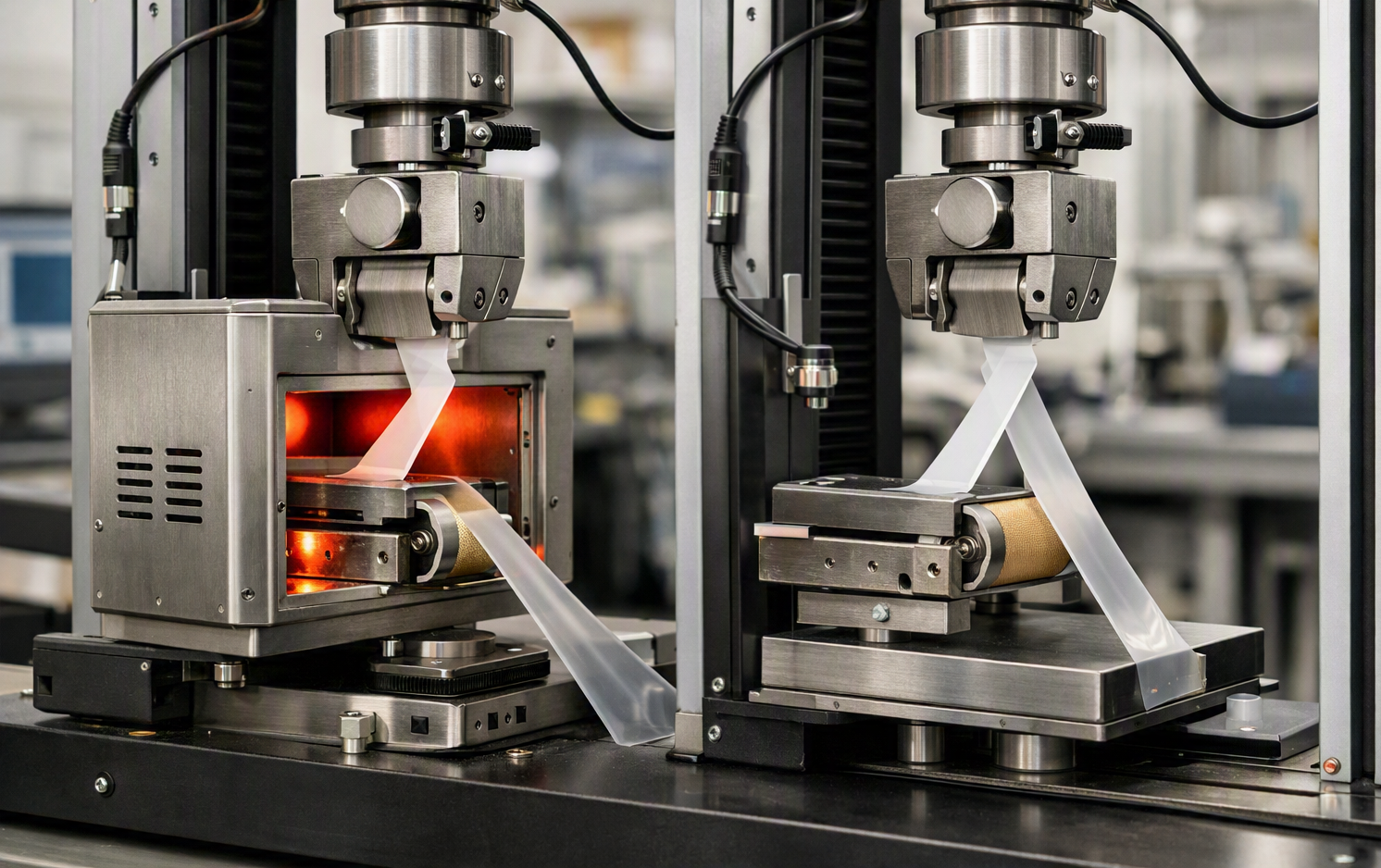
Selection Criteria by Thickness and Substrate Application
Common commercially available thicknesses include 38, 50, 75, and 100 μm. However, thickness alone does not determine application suitability.
Final selection depends on the complete process and production trials.
Pressroom Troubleshooting: Failure Modes and Solutions
When troubleshooting heat transfer defects, it is important to recognize that the PET release film is only one component of a complex interaction.
While selecting the correct PET carrier is critical, a comprehensive evaluation must acknowledge the entire production ecosystem.
Application issues can frequently stem from—or be exacerbated by the specific ink formulation, adhesive chemistry, and curing parameters.
Furthermore, operational and environmental variables actively contribute to the success or failure of the transfer process.
For a broader understanding of these variables, you can consult this transfer printing process guide.
These factors include press settings (time, temperature, pressure), static electricity accumulation, material storage conditions, and the physical characteristics of the final substrate.
Here is a quick, practical troubleshooting guide for the pressroom floor.
| Defect | Likely Root Cause | Corrective Action |
| Uneven peeling across the roll (some spots stick, some don’t) | Potential variation in the release coating application, or uneven heat/pressure distribution on the press platen. | Verify press pressure and temperature uniformity. If inconsistencies persist across different spots on the roll, consult your supplier. |
| Pinholing or ink beading (ink won’t lay flat) | Possible chemical mismatch where the ink is rejecting the film’s specific release coating. | Verify ink compatibility with the current film’s coating formulation, or test an alternative release system. |
| Powder lift or ink peeling off the garment | The ink or adhesive powder may not be fully melted, or the peel temperature was too high. | Increase the dwell time under the heat press to ensure full curing, or evaluate a warm/cold peel workflow. |
| Broken fine lines, chipped edges, or missing dots | The release coating may be gripping the ink too tightly for the chosen peel temperature. | Evaluate a cold peel process for fine-detail jobs, or test a film engineered with a lower release force. |
| “Orange peel” texture, haze, or uneven gloss | Uneven press pressure/heat, or the adhesive may not have melted completely before separation. | Check for cold spots on the heat press platen. Ensure the adhesive is fully cured prior to peeling. |
| Film curling, static buildup, or feeding jams | The film’s gauge may be insufficient for the press tension, or the workspace may lack adequate humidity. | Check static eliminators and environmental controls. If issues continue, testing a thicker carrier (e.g., 75 µm) may improve web handling. |
| Adhesion failure (transfer washes off the shirt later) | Possible interference between the release coating and the adhesive system, or inadequate curing parameters. | Verify optimal cure times and temperatures. If settings are correct, evaluate a different film formulation to ensure compatibility with your adhesive. |
Decision Framework for Pressroom Managers
When a defect appears, operators should follow this simple step-by-step checklist:
Evaluate your peel timing first: Before changing any heat or pressure settings on the press, verify that the peel timing matches the film’s specifications.
Peeling outside the recommended temperature window can contribute to edge-tearing and detail-loss issues.
Check your cure state: Are the ink and adhesive powder fully melted and set? Inadequate curing can cause transfers to lift, peel off the garment prematurely, or appear dull.
Assess consistency: If the peeling behavior varies from one graphic to the next, there may be variations in the release coating or localized temperature fluctuations on the press.
Test the release force at different spots across the web while confirming uniform press temperatures.
Evaluate film thickness: If the carrier repeatedly curls, wrinkles, or jams in the equipment, and environmental factors like humidity are controlled, the current material may lack the necessary structural rigidity.
Testing a thicker or stiffer film profile may help resolve web handling issues.
Investigate chemistry: If the ink constantly beads up on the film, or if the final transfer fails a wash test despite proper curing, the film’s chemical coating may not be compatible with your specific ink system.
Evaluating a different formulation or brand may be necessary.
About Yaxing
Quanzhou Yaxing New Material Technology Co., Ltd. manufactures PET heat-transfer release and carrier films for transfer-printing workflows.
Yaxing supplies film materials to converters and printing manufacturers.
Summary
Selecting the right PET release film for heat transfer printing isn’t just about picking a generic “one-size-fits-all” roll off the shelf.
You need to look at three factors together:
- The Release System: Which surface treatment or coating chemistry is compatible with your ink, adhesive, peel conditions, and production process?
- The Peel Window: Does your specific job require a hot, warm, or cold peel?
- The Film Thickness: Which thickness provides suitable handling, dimensional stability, and process compatibility under your actual printing and pressing conditions?
Evaluating these factors together can help reduce process mismatch, support more consistent trials, and narrow the most suitable film options for a specific production workflow.
Frequently Asked Questions (FAQ)
Why is there uneven peeling across the PET release film roll?
Uneven peeling can be caused by potential variation in the release coating application, or uneven heat/pressure distribution on the press platen. Verify press pressure and temperature uniformity. If inconsistencies persist across different spots on the roll, consult your supplier.
What causes pinholing or ink beading on heat transfer film?
This usually indicates a possible chemical mismatch where the ink is rejecting the film’s specific release coating. Verify ink compatibility with the current film’s coating formulation, or test an alternative release system.
How do I fix broken fine lines, chipped edges, or missing dots during peeling?
The release coating may be gripping the ink too tightly for the chosen peel temperature. Evaluate a cold peel process for fine-detail jobs, or test a film engineered with a lower release force.
Why is my PET film curling, building static, or jamming in the equipment?
The film’s gauge may be insufficient for the press tension, or the workspace may lack adequate humidity. Check static eliminators and environmental controls. If issues continue, testing a carrier with greater structural rigidity may improve web handling. Confirm the final selection through production trials.
Why does the transfer wash off the garment after pressing?
Adhesion failure is often due to possible interference between the release coating and the adhesive system, or inadequate curing parameters. Verify optimal cure times and temperatures. If settings are correct, evaluate a different film formulation to ensure compatibility with your adhesive.